 By Emma Hartley, Food Editor
Reviewed & updated September 2026
Cooking for one comes with its own math problem — most recipes assume a family of four, and by the time you've halved the ingredients (or eaten the same casserole for five nights straight), "healthy" starts to feel like more effort than it's worth. These ideas are built around portions that actually make sense for a single person, minimal cleanup, and ingredients that don't go to waste in the back of the fridge.
 In this guideCurated by Emma · 9 min read
- The single-serving problem, and how to actually solve it
- The base formula: protein, vegetable, starch, sauce
- The anchor recipe: one-pan lemon garlic chicken and vegetables
- One-Pan Lemon Garlic Chicken for One
- 10 more quick swaps on the same formula
- Grocery shopping tips that actually prevent waste
- Batch a few components without batch-cooking full meals
- The takeaway
- Further reading & trusted sources
The single-serving problem, and how to actually solve it
The real obstacle to eating well for one isn't cooking skill — it's ingredient waste and recipe scaling. A bag of spinach or a bunch of cilantro is sized for a household, not a solo dinner, and half of it usually ends up wilted in a drawer. The fix is leaning on ingredients that keep well in smaller quantities (eggs, canned beans, frozen vegetables, pre-portioned proteins) and building meals around a repeatable formula rather than a rotating cast of recipes that each need their own grocery list.
The base formula: protein, vegetable, starch, sauce
Almost every healthy dinner for one breaks down into four components you can mix and match without ever getting bored:
- A protein — a single chicken breast, two eggs, a can of tuna, or a portion of tofu.
- A vegetable — whatever's in season fresh, or a handful from a bag of frozen mixed vegetables that won't spoil before you use it again.
- A starch — a small portion of rice, a sweet potato, or a slice of whole-grain bread.
- A sauce or seasoning — this is what keeps the same four ingredients from tasting identical every night; rotate between a squeeze of citrus, a spoonful of pesto, soy-ginger, or a simple vinaigrette.
The anchor recipe: one-pan lemon garlic chicken and vegetables
One-Pan Lemon Garlic Chicken for One
A single-serving sheet pan dinner with chicken breast, roasted vegetables, and a bright lemon-garlic finish — built for one person with minimal cleanup.
☆☆☆☆☆
Ingredients
- 1 boneless skinless chicken breast (about 6 oz)
- 1 cup broccoli florets
- 1 small sweet potato, cubed
- 1 tbsp olive oil, divided
- 2 cloves garlic, minced
- 1/2 lemon, juiced and zested
- 1/2 tsp dried oregano
- Salt and pepper, to taste
Instructions
- Step 1. Preheat the oven to 400°F. Toss the sweet potato cubes with half the olive oil, salt, and pepper on a small sheet pan and roast for 10 minutes.
- Step 2. While the sweet potato roasts, toss the broccoli with the remaining oil and season the chicken breast with salt, pepper, and oregano.
- Step 3. Push the sweet potato to one side of the pan and add the chicken breast and broccoli. Roast for another 15-18 minutes, until the chicken reaches 165°F internally and the vegetables are tender.
- Step 4. Remove from the oven, sprinkle minced garlic and lemon zest over everything, and let it sit for 2 minutes so the residual heat softens the raw garlic slightly.
- Step 5. Squeeze the lemon juice over the finished plate right before eating.
This one-pan approach is the template for most of the ideas below — swap the protein, vegetable, or sauce, and you've got a new dinner without a new dish to wash.
10 more quick swaps on the same formula
- Garlic butter shrimp over rice — a handful of frozen shrimp cooks in under 5 minutes and pairs with whatever grain you already have on hand.
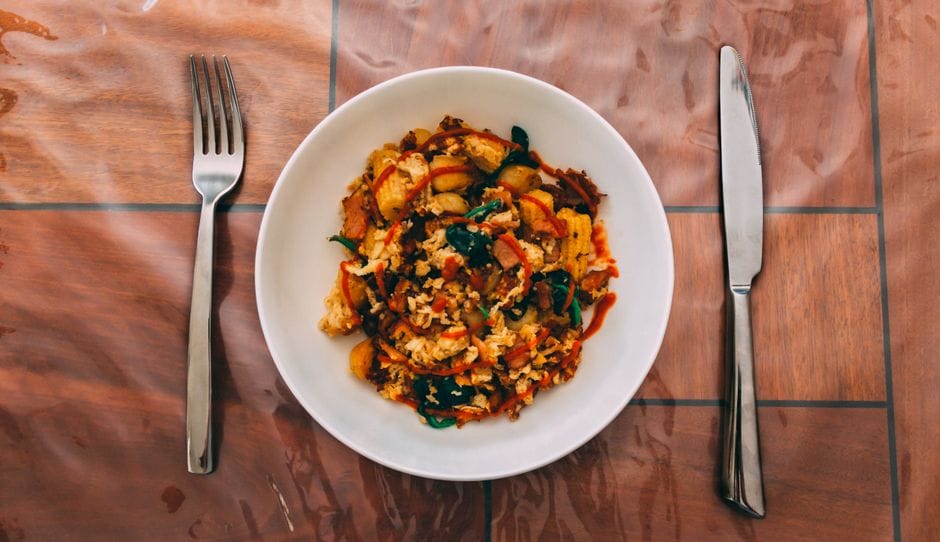
- Egg and vegetable stir-fry — two eggs scrambled with leftover roasted vegetables and a splash of soy sauce turns "nothing to eat" into dinner in 8 minutes.
- Canned salmon patties — mixed with breadcrumbs and an egg, pan-fried, and served over greens; canned salmon doesn't spoil like fresh does if plans change.
- Tofu and frozen stir-fry vegetable bowl — a block of tofu keeps for a week once opened and refrigerated in water, changed daily.
- Turkey chili for one — browning a quarter-pound of ground turkey with canned beans and tomatoes in a single small pot makes just enough for one big bowl plus a lunch portion.
- Baked sweet potato with black beans and salsa — one sweet potato, a half-can of beans, and whatever salsa is in the fridge is a full meal in 45 mostly hands-off minutes.
- Tuna and white bean salad — canned tuna, canned white beans, olive oil, and lemon needs no cooking at all on nights you don't want to turn on the stove.
- Sheet pan sausage and peppers — one sausage link and a bell pepper roasted together is a low-effort dinner that uses one pan and one knife.
- Zucchini noodle shrimp scampi — a lighter, lower-carb spin on the same garlic-butter-shrimp idea using spiralized zucchini instead of pasta.
- Breakfast-for-dinner veggie omelette — eggs are one of the few ingredients that are genuinely portioned for one person already, which makes this the lowest-effort option on the list.
Grocery shopping tips that actually prevent waste
- Buy proteins in bulk and freeze individual portions. A family-size pack of chicken breasts split into single-serving freezer bags costs less per pound than buying one breast at a time, and nothing spoils before you use it.
- Keep a "flexible base" stocked at all times — rice, canned beans, and frozen vegetables all have long shelf lives and form the backbone of most of the meals above.
- Buy pre-washed, pre-cut vegetables when the price difference is small. For one person, the convenience often outweighs the extra cost, especially if it means the vegetables actually get used before they wilt.
- Use the freezer for herbs you won't finish. Fresh herbs frozen in a little oil in an ice cube tray last for months instead of wilting in four days.
Batch a few components without batch-cooking full meals
Cooking for one doesn't mean cooking one portion of everything, every night. Roasting a full tray of vegetables or cooking a full pot of rice once, then portioning it across two or three different dinners with different proteins and sauces, gets you the time savings of meal prep without the boredom of eating the exact same meal on repeat.
The takeaway
Healthy dinners for one aren't about finding recipes specifically labeled "for one" — they're about learning a repeatable protein-vegetable-starch-sauce formula and stocking a few flexible staples that don't go to waste in small quantities. Once that framework is in place, "what's for dinner" stops being a nightly decision and becomes a matter of picking which sauce you're in the mood for.
Frequently asked questions
Is it more expensive to cook healthy meals for just one person?
It can be if you're buying fresh produce and proteins in small quantities repeatedly, but buying in bulk and freezing individual portions — especially for proteins — usually brings the per-meal cost back in line with cooking for a household.
How do I stop vegetables from going bad before I can use them?
Lean on frozen vegetables for anything you won't use within a few days, and buy fresh produce in smaller, more frequent trips rather than one big weekly haul that outlasts its freshness.
What's the easiest healthy dinner for one when I have zero energy to cook?
A veggie omelette or a can of tuna mixed with canned beans and olive oil both take under 10 minutes with almost no cleanup, and both cover a solid protein and vegetable base.
Can I meal prep for one person, or is that just for families?
Yes — prepping components (a batch of rice, a tray of roasted vegetables, a few cooked chicken breasts) rather than fully assembled meals lets one person get the time savings of meal prep while still having variety across the week.
Read next
Further reading & trusted sources
From our test kitchen
The real obstacle to cooking healthy for one isn’t skill, it’s that most fresh produce is sold in quantities sized for a household — a bag of spinach bought for a single dinner usually spoils before it’s used a second time. Buying proteins in family-size packs and freezing them in individual portions solves this more reliably than trying to find recipes specifically labeled ‘for one,’ since a frozen single chicken breast costs less per pound than the same amount bought separately each week.
Emma thinks a recipe has failed if it needs a long backstory before the ingredients — so hers get straight to the point, with the small technique notes that actually change how a dish turns out. She leads The Nourish Kitchen’s recipes and food guides, writing each one to work in a real, busy kitchen rather than a photo studio. AI tools help with research and drafting, and a human checks every recipe for clarity and food safety before it publishes. Nutrition figures are honest estimates, never guarantees.