 By Emma Hartley, Food Editor
Reviewed & updated September 2026
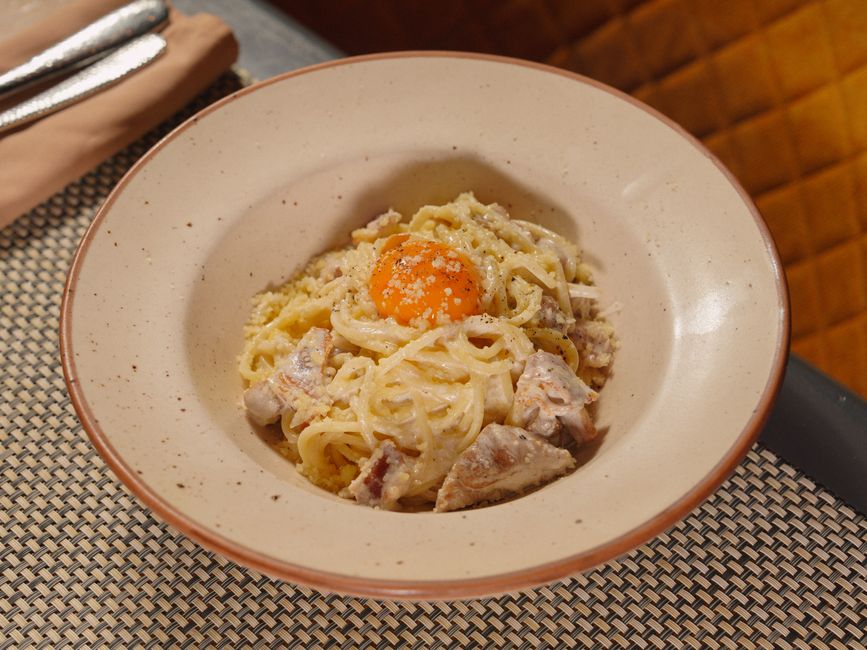
Classic carbonara already leans on eggs and cheese for its signature creaminess, which makes it a surprisingly easy dish to boost into a genuinely high-protein dinner without losing what makes it good. A few swaps and one extra egg, and you've got a 30+ gram protein plate that still tastes like the real thing.
 Skip ahead toCurated by Emma · 8 min read
High-Protein Carbonara
A protein-boosted take on classic carbonara using extra egg, Greek yogurt, and turkey bacon, ready in about 20 minutes.
☆☆☆☆☆
Ingredients
- 12 oz high-protein or regular spaghetti
- 6 slices turkey bacon or pancetta, chopped
- 3 large eggs
- 2 large egg whites
- 1/4 cup plain Greek yogurt
- 1 cup finely grated parmesan, plus more for serving
- 2 cloves garlic, minced
- 1/2 teaspoon black pepper, plus more to taste
- 1/4 cup reserved pasta water
- Salt to taste
Instructions
- Step 1. Bring a large pot of salted water to a boil and cook the pasta according to package directions until al dente. Reserve 1/4 cup pasta water before draining.
- Step 2. While the pasta cooks, add the turkey bacon or pancetta to a large skillet over medium heat and cook until crisp, about 5-7 minutes. Add the garlic in the last minute and stir until fragrant.
- Step 3. In a bowl, whisk together the whole eggs, egg whites, Greek yogurt, parmesan, and black pepper until smooth.
- Step 4. Remove the skillet from heat and let it cool for 1-2 minutes so the eggs don’t scramble when added.
- Step 5. Add the drained hot pasta to the skillet with the bacon, then pour the egg mixture over the top, tossing quickly and constantly with tongs until the sauce turns glossy and coats the noodles.
- Step 6. Add reserved pasta water a splash at a time if the sauce needs loosening. Season with salt and extra pepper, then serve immediately with extra parmesan on top.
Why this version works
Traditional carbonara gets its protein almost entirely from eggs, cheese, and pancetta, which already puts it ahead of most pasta dishes — this version just leans further into that strength. Adding extra egg whites boosts protein without adding much fat or changing the texture, since whites blend seamlessly into the same silky sauce the yolks create. A spoonful of Greek yogurt stands in for some of the traditional egg yolk richness, adding a bit more protein and a slight tang without making the sauce heavy or noticeably different from the original.
The technique that actually matters
Carbonara lives or dies on one moment: adding the egg mixture to hot pasta without scrambling it. The classic trick is to let the pan cool slightly off the heat before adding the eggs, then toss constantly and quickly so the residual heat gently thickens the sauce instead of cooking it into curds. If the sauce looks like it's starting to clump instead of turning glossy, pull the pan further from any remaining heat and keep tossing — a splash of the reserved pasta water almost always saves a sauce that's heading toward scrambled.
Ingredient swaps that keep it protein-forward
- Turkey bacon or pancetta: Either works; turkey bacon is leaner if you're watching total fat, while pancetta gives a more traditional flavor.
- Regular vs. high-protein pasta: A high-protein or legume-based pasta can push total protein even higher per serving if you want to maximize it further, though it changes the texture slightly from traditional wheat pasta.
- Greek yogurt vs. cottage cheese: Blended cottage cheese can replace the Greek yogurt for an even bigger protein boost, though it needs a quick blend first to avoid a grainy texture in the final sauce.
- Extra parmesan: Parmesan is naturally high in protein relative to its volume, so a generous hand with it (both mixed in and as a finishing touch) adds real protein along with flavor.
Common mistakes
- Adding eggs to a pan that's still too hot. This is the single most common way carbonara turns into scrambled eggs with pasta instead of a silky sauce. Let the pan cool for a minute or two off heat first.
- Skipping the pasta water. Reserved starchy pasta water is what lets the sauce loosen to the right consistency without adding plain water, which would dilute the flavor and thin the sauce too much.
- Overcooking the pasta. Carbonara sauce continues to gently cook and thicken on the noodles after tossing, so pasta cooked to just shy of al dente holds its texture better through that final step.
- Using pre-shredded parmesan. Pre-shredded cheese contains anti-caking agents that keep it from melting as smoothly into the sauce. Freshly grated parmesan melts far more evenly.
Storage and reheating
Carbonara is best eaten fresh, since the egg-based sauce can separate or turn slightly rubbery when reheated. If you do have leftovers, store them in an airtight container in the fridge for up to 2 days, and reheat gently in a skillet over low heat with a splash of water or milk, stirring constantly to bring the sauce back together rather than microwaving it at full power.
The takeaway
Carbonara is already one of the more protein-friendly pasta dishes on its own, and a couple of small swaps — extra egg whites, a spoonful of Greek yogurt, a generous hand with parmesan — push it into genuinely high-protein territory without changing what makes it comforting. The technique matters more than any ingredient list, so take the extra 30 seconds to let the pan cool before adding the eggs.
Frequently asked questions
Can I make carbonara without pancetta or bacon?
Yes, though you'll lose some of the smoky, salty depth it adds. A vegetarian version can lean more heavily on parmesan and black pepper, or substitute a plant-based bacon alternative for similar texture and saltiness.
Why did my carbonara turn into scrambled eggs?
This happens when the egg mixture hits a pan that's still too hot. Let the pan cool for a minute or two off the heat before adding the eggs, and toss constantly rather than letting the mixture sit still in one spot.
Is carbonara actually high in protein without modification?
Traditional carbonara already has a reasonable amount of protein from eggs, cheese, and pancetta — typically 18-22 grams per serving — but the modifications in this recipe push it well past 30 grams without a major flavor change.
Can I use whole wheat or legume-based pasta for more protein?
Yes, a chickpea or lentil-based pasta can add another 5-10 grams of protein per serving, though the texture is noticeably different from traditional wheat pasta and holds up slightly less well to the tossing technique.
Read next
Further reading & trusted sources
Where recipes usually go wrong
Letting the pan cool for a minute or two before the egg mixture goes in is the single step that determines whether carbonara turns silky or scrambles into bits, since even mild residual heat can cook eggs into curds faster than most people expect. Pre-shredded parmesan resists melting smoothly into the sauce because of the anti-caking coating on the shreds, which is why freshly grated cheese makes a noticeably bigger difference here than in most other pasta sauces.
Emma thinks a recipe has failed if it needs a long backstory before the ingredients — so hers get straight to the point, with the small technique notes that actually change how a dish turns out. She leads The Nourish Kitchen’s recipes and food guides, writing each one to work in a real, busy kitchen rather than a photo studio. AI tools help with research and drafting, and a human checks every recipe for clarity and food safety before it publishes. Nutrition figures are honest estimates, never guarantees.