 By Emma Hartley, Food Editor
Reviewed & updated September 2026
Takeout stir-fry is fast but usually light on protein and heavy on sauce and rice. This version flips that balance — a generous portion of chicken (or your protein of choice), a mountain of vegetables, and a sauce that clings without drowning everything, all done in one pan in about 20 minutes.
 On this pageCurated by Emma · 8 min read
Why this recipe works
Most stir-fry recipes treat protein as an afterthought — a few strips of chicken scattered through a pile of rice and vegetables. This one reverses the ratio, using a full pound of protein per batch so each serving actually delivers, while the vegetables add volume, fiber, and color without diluting the protein content.
The other key is cooking in stages rather than dumping everything in the pan at once. Searing the protein first, then the vegetables, then combining everything with the sauce at the end keeps the protein from steaming and the vegetables from turning mushy — the difference between a stir-fry that tastes like takeout and one that tastes like it sat in a pan too long.
High-Protein Stir-Fry
A one-pan stir-fry loaded with chicken and vegetables in a savory garlic-ginger sauce, ready in about 20 minutes.
☆☆☆☆☆
Ingredients
- 1 lb boneless, skinless chicken breast or thighs, cut into thin strips
- 1 tbsp cornstarch
- 2 tbsp neutral oil, divided
- 2 cups broccoli florets
- 1 red bell pepper, sliced
- 1 cup snap peas
- 1 carrot, thinly sliced
- 3 cloves garlic, minced
- 1 tbsp fresh ginger, grated
- 1/4 cup low-sodium soy sauce
- 2 tbsp oyster sauce
- 1 tbsp rice vinegar
- 1 tsp honey or brown sugar
- 1/4 cup water
- 1 tsp sesame oil
- Sesame seeds and sliced green onion, for topping
Instructions
- Step 1. Toss the sliced chicken with the cornstarch until evenly coated; this helps it sear rather than steam.
- Step 2. In a small bowl, whisk together the soy sauce, oyster sauce, rice vinegar, honey, water, and sesame oil to make the sauce. Set aside.
- Step 3. Heat 1 tablespoon of oil in a large skillet or wok over high heat. Add the chicken in a single layer and sear for 3-4 minutes per side until golden and cooked through. Remove and set aside.
- Step 4. Add the remaining tablespoon of oil to the same pan. Add the broccoli, bell pepper, snap peas, and carrot, and stir-fry for 4-5 minutes until crisp-tender.
- Step 5. Push the vegetables to one side, add the garlic and ginger to the empty space, and cook for 30 seconds until fragrant.
- Step 6. Return the chicken to the pan, pour in the sauce, and toss everything together. Cook for 1-2 minutes until the sauce thickens slightly and coats everything evenly.
- Step 7. Top with sesame seeds and sliced green onion. Serve immediately over rice, cauliflower rice, or on its own.
Tips for the best stir-fry
Cut everything before you start cooking. Stir-frying moves fast once the pan is hot, so having the chicken sliced, vegetables cut, and sauce whisked ahead of time keeps the process smooth instead of chaotic.
Don't crowd the pan. Searing the chicken in a single layer, with space between pieces, lets it brown properly. A crowded pan traps steam and leaves the chicken pale and rubbery instead of golden.
Cook on high heat. Stir-fry depends on high, fast heat to get a slight char on the vegetables while keeping their crunch. A pan that's not hot enough turns the dish soggy instead of vibrant.
Coat the protein in cornstarch. This small step, common in Chinese restaurant cooking, creates a light coating that seals in moisture and helps the sauce cling better to the protein.
Variations
Beef or shrimp stir-fry. Swap the chicken for thinly sliced flank steak or peeled shrimp — both cook fast, so adjust timing down to 2-3 minutes for shrimp and 2-3 minutes per side for beef.
Tofu stir-fry. For a vegetarian version, use extra-firm tofu, pressed and cubed, pan-seared until golden before adding it back in with the sauce, same as the chicken.
Spicier version. Add 1-2 teaspoons of chili garlic sauce or a pinch of red pepper flakes to the sauce mixture for a spicy kick.
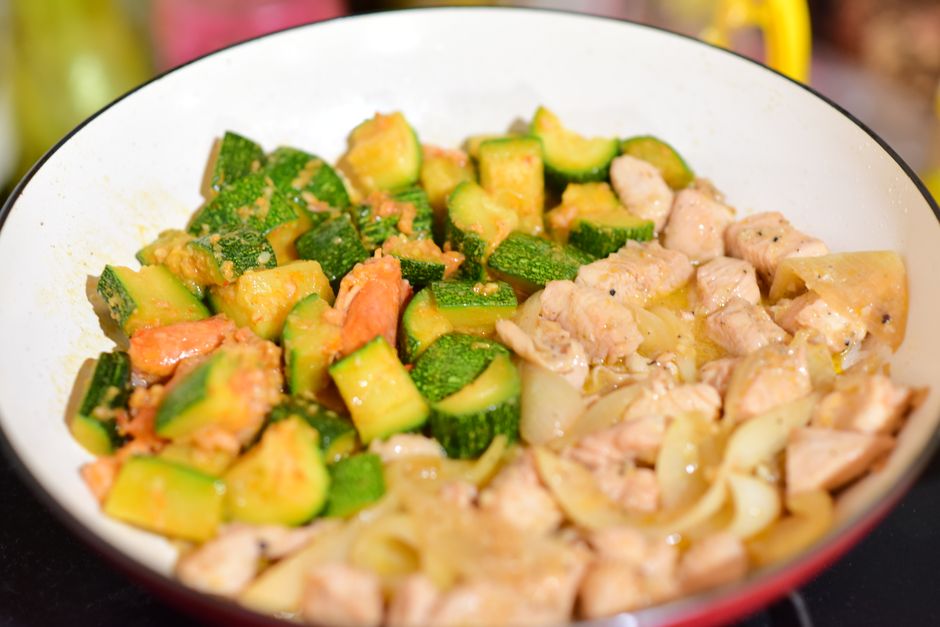
Different vegetables. Mushrooms, baby corn, zucchini, and bok choy all work well in this formula — use whatever vegetables you have on hand, keeping the total volume similar.
Storage and reheating
Store leftovers in an airtight container in the refrigerator for up to 4 days. The vegetables will soften slightly on reheating but stay perfectly enjoyable for meal prep.
Reheat in a skillet over medium heat for a few minutes, which helps restore some of the pan-seared texture, or in the microwave in 60-second intervals if you're short on time. This recipe isn't recommended for freezing, since the vegetables lose their crisp texture once thawed.
The takeaway
A high-protein stir-fry comes down to two things most takeout skips: enough actual protein to matter and cooking in stages so nothing steams or overcooks. Once you've got the technique down — sear the protein, stir-fry the vegetables, combine with sauce at the end — you can swap in whatever protein and vegetables you have and get a reliably good result in about 20 minutes.
Frequently asked questions
Can I meal prep this stir-fry?
Yes — it holds up well in the fridge for up to 4 days, making it a solid meal-prep option. Consider slightly undercooking the vegetables if you're prepping ahead, since they'll continue softening as they sit.
What can I serve with this stir-fry?
Steamed white or brown rice is the classic pairing, with cauliflower rice as a lower-carb option. It also works well on its own or over noodles.
Can I use frozen vegetables?
Yes, though pat them dry first and expect a slightly softer texture than fresh, since frozen vegetables release more water as they cook.
How do I keep the sauce from getting watery?
Make sure the pan is hot and don't add too much water to the sauce mixture. If it still seems thin, let it simmer for an extra minute or two before serving to reduce and thicken.
Read next

Further reading & trusted sources
Worth knowing before you start
Coating the protein in cornstarch before searing is the single step home cooks skip most often, and it’s the reason restaurant stir-fry has that slightly glossy, sauce-clinging finish that a home version without it usually lacks. Crowding the pan is the other quiet culprit — even a hot wok can’t sear if the chicken is piled two layers deep, since the trapped steam keeps the surface wet instead of browning it.
Emma thinks a recipe has failed if it needs a long backstory before the ingredients — so hers get straight to the point, with the small technique notes that actually change how a dish turns out. She leads The Nourish Kitchen’s recipes and food guides, writing each one to work in a real, busy kitchen rather than a photo studio. AI tools help with research and drafting, and a human checks every recipe for clarity and food safety before it publishes. Nutrition figures are honest estimates, never guarantees.