 By Emma Hartley, Food Editor
Reviewed & updated September 2026
Baked oats have taken over breakfast for a reason — one bowl of ingredients goes into the oven and comes out looking (and tasting) more like a warm cake than a bowl of oatmeal. This version pushes the protein up using eggs, Greek yogurt, and milk instead of relying on a scoop of protein powder, so it works even if your pantry doesn't have any.
 Skip ahead toCurated by Emma · 8 min read
Why this recipe works
Regular oatmeal is mostly carbs with a modest amount of protein, which is part of why it doesn't always keep people full until lunch. This baked oats recipe rebalances that by leaning on eggs and Greek yogurt for protein, while the oats still provide fiber and that comforting, cake-like texture once baked.
Baking the oats instead of cooking them stovetop changes the texture completely — the eggs set like a custard, the top gets slightly golden, and the inside stays moist and tender rather than gluey, which is the texture most people associate with rushed stovetop oatmeal.
High-Protein Baked Oats
A single-serving baked oats recipe with 25+ grams of protein per serving, made with eggs, Greek yogurt, and oats — no protein powder required.
☆☆☆☆☆
Ingredients
- 1/2 cup rolled oats
- 1/2 tsp baking powder
- 1/4 tsp cinnamon
- Pinch of salt
- 1 large egg
- 1/4 cup plain Greek yogurt
- 1/4 cup milk of choice
- 1 tbsp honey or maple syrup
- 1/2 tsp vanilla extract
- 1/2 banana, sliced (or 1/4 cup berries)
- Optional: 1 tbsp mini chocolate chips or chopped nuts
Instructions
- Step 1. Preheat oven to 375°F (190°C). Lightly grease a ramekin or small oven-safe dish.
- Step 2. In a bowl, whisk together the oats, baking powder, cinnamon, and salt.
- Step 3. In a separate bowl, whisk the egg, Greek yogurt, milk, honey, and vanilla until smooth.
- Step 4. Pour the wet mixture into the dry ingredients and stir until fully combined.
- Step 5. Fold in half the banana slices (or berries) and any mix-ins like chocolate chips.
- Step 6. Pour the batter into the prepared ramekin and top with the remaining banana slices.
- Step 7. Bake for 22-25 minutes, until the top is golden and the center is set (a toothpick should come out mostly clean).
- Step 8. Let cool for 3-5 minutes before eating — it firms up slightly as it sits.
Tips for the best texture
Don't skip the resting time. Baked oats look slightly underdone straight out of the oven, but they continue to set as they cool. Pulling them out a few minutes early and letting them rest gives you that fluffy, custard-like texture instead of a dry, overbaked top.
Use quick or rolled oats, not steel-cut. Steel-cut oats don't soften enough in this bake time and will leave the dish crunchy in a way that doesn't work here. Old-fashioned rolled oats give the best balance of structure and softness.
Full-fat Greek yogurt gives the creamiest result, though low-fat works fine if that's what you have on hand — the texture difference is noticeable but not dramatic.
Variations to try
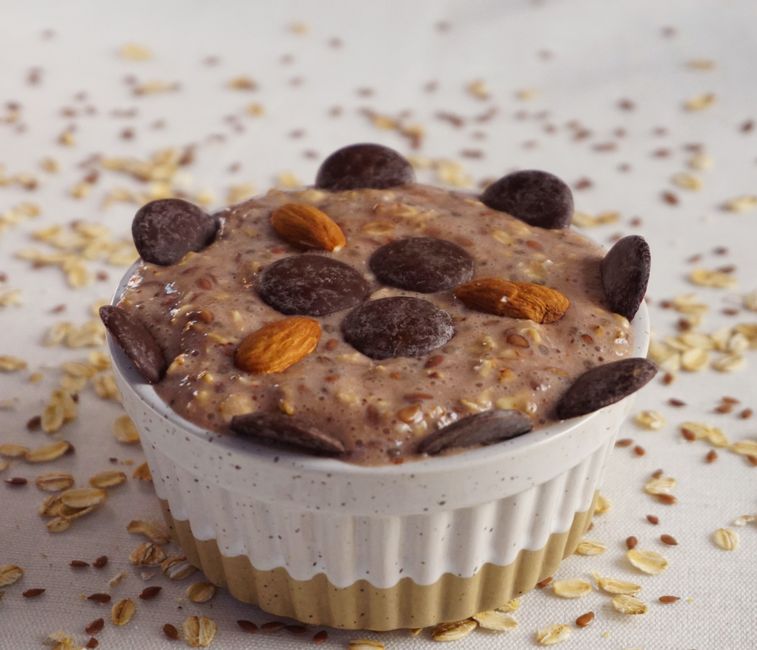
Chocolate peanut butter: Swap the banana for a tablespoon of peanut butter swirled into the batter, plus a tablespoon of cocoa powder mixed into the dry ingredients.
Apple cinnamon: Replace the banana with diced apple and bump the cinnamon up to 1/2 teaspoon, plus a pinch of nutmeg if you have it.
Berry vanilla: Use a mix of blueberries and raspberries instead of banana, and add an extra splash of vanilla extract for a brighter flavor.
Double batch for meal prep: This recipe scales easily — double or triple the ingredients and bake in a small casserole dish for 30-35 minutes, then slice into individual portions for the week.
How to store and reheat
Baked oats keep well in the fridge for up to 4 days in an airtight container. Reheat in the microwave for 30-45 seconds, or in a 350°F oven for about 8 minutes if you want the top to re-crisp slightly.
They also freeze well — portion into individual containers, freeze for up to 2 months, and thaw overnight in the fridge before reheating. This makes the double-batch version genuinely useful for busy weeks rather than something you have to eat fresh every time.
Why this beats a protein powder version
Protein powder-based baked oats can turn out dense, dry, or with an artificial aftertaste depending on the brand, since powders vary a lot in how they bake. Building the protein from whole-food sources like eggs and Greek yogurt instead gives a more consistently fluffy texture and a cleaner flavor, while still landing well over 20 grams of protein in a single serving.
It also means you don't need to keep a tub of protein powder on hand just to make this recipe — everything here is a pantry and fridge staple most people already buy regularly.
The takeaway
High-protein baked oats solve the "oatmeal doesn't keep me full" problem without needing a scoop of protein powder — eggs and Greek yogurt do the work instead, while the oven gives you a fluffy, custard-like texture regular stovetop oatmeal can't match. It's a five-minute prep, mostly hands-off bake, and a genuinely satisfying way to start the day.
Frequently asked questions
Can I make baked oats without eggs?
Yes — a flax egg (1 tablespoon ground flaxseed mixed with 3 tablespoons water, rested for 5 minutes) works as a substitute, though the protein content and the custardy texture will both be slightly reduced.
How much protein do baked oats have?
This recipe has about 26 grams of protein per serving, coming primarily from the egg and Greek yogurt rather than any added protein powder.
Can I meal prep baked oats for the week?
Yes — double or triple the recipe, bake it in a larger dish, slice into portions, and store in the fridge for up to 4 days or freeze for up to 2 months.
Why did my baked oats turn out dry?
Overbaking is the most common cause. Pull the dish out once the center is just set (a toothpick will come out mostly clean, not fully clean) — it firms up more as it cools, so slightly underdone-looking is exactly right.
Read next


Further reading & trusted sources
The trick that actually works
Baked oats look underdone right when they should come out of the oven, which is exactly why so many people leave them in too long chasing a fully-set center — the custard-like texture actually finishes setting during the few minutes of resting after baking, not in the oven itself. Steel-cut oats get substituted in more often than they should, but the shorter bake time here never softens them enough, leaving a noticeably crunchy result that rolled or quick oats don’t have.
Emma thinks a recipe has failed if it needs a long backstory before the ingredients — so hers get straight to the point, with the small technique notes that actually change how a dish turns out. She leads The Nourish Kitchen’s recipes and food guides, writing each one to work in a real, busy kitchen rather than a photo studio. AI tools help with research and drafting, and a human checks every recipe for clarity and food safety before it publishes. Nutrition figures are honest estimates, never guarantees.