 By Emma Hartley, Food Editor
Reviewed & updated September 2026
Kimchi fried rice is the kind of dinner that comes together almost entirely from things already sitting in your fridge — day-old rice, a jar of kimchi, an egg, and whatever protein you have on hand. The tangy, funky kimchi does most of the flavor work, so there's no long ingredient list and no marinating required. This is a genuinely fast, weeknight-realistic dinner, not a "quick" recipe that secretly takes 45 minutes.
 Skip ahead toCurated by Emma · 9 min read
Why day-old rice matters here
Fresh-cooked rice is too moist and clumps together when you try to fry it — you end up with a mushy, steamed texture instead of the separate, slightly crisp grains that make good fried rice good. Rice that's been refrigerated overnight loses moisture and firms up, so it fries into distinct grains instead of a sticky mass. If you're starting from scratch, cook the rice a day ahead, or spread freshly cooked rice on a sheet pan and refrigerate uncovered for 30-45 minutes to dry it out fast.
Why kimchi's age matters more than you'd think
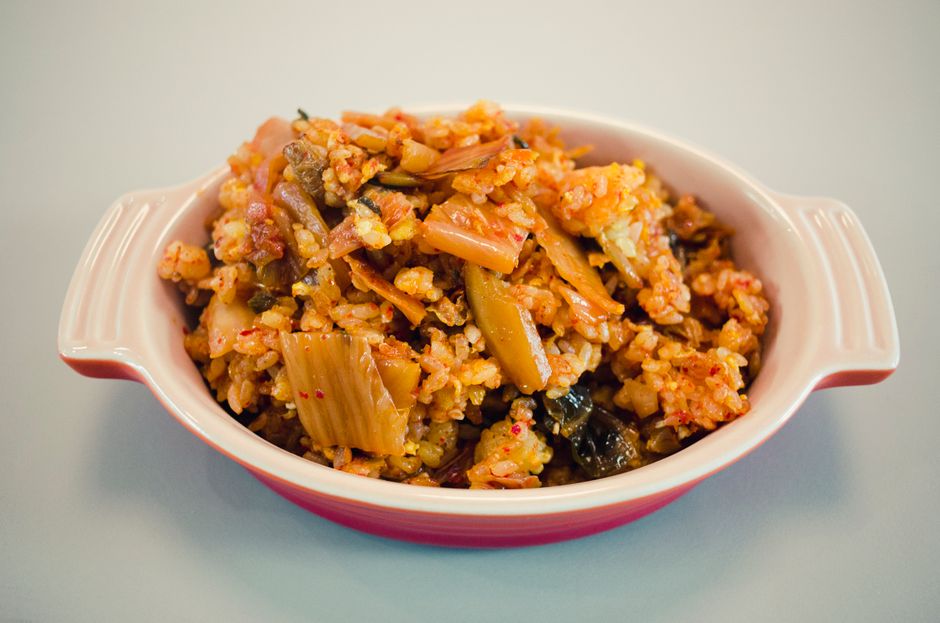
Fresh, mild kimchi works fine, but well-fermented, slightly sour kimchi (two to four weeks old, or an older jar you've had in the back of the fridge) actually produces better fried rice — the deeper sourness and funk hold up against the heat of the pan far better than mild, fresh kimchi does, which can taste flat once cooked. Don't throw out kimchi just because it's gotten more sour with age; that's exactly when it's best for this dish.
Kimchi Fried Rice
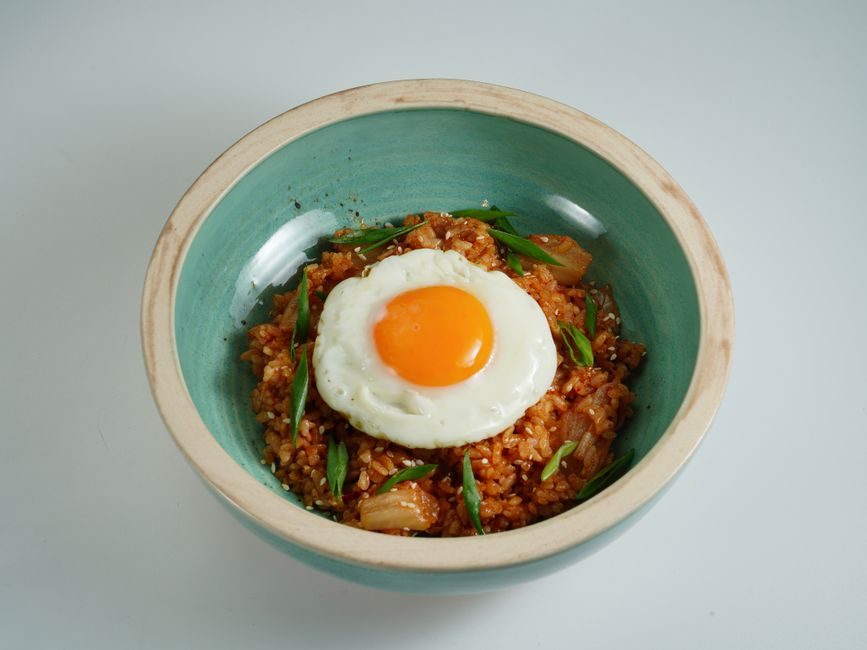
A fast, savory fried rice built around fermented kimchi, day-old rice, and a fried egg on top.
☆☆☆☆☆
Ingredients
- 3 cups cooked, cold day-old rice
- 1 1/2 cups kimchi, chopped, plus 2-3 tbsp kimchi juice from the jar
- 2 tbsp neutral oil (avocado or vegetable), divided
- 1/2 cup diced onion
- 2 cloves garlic, minced
- 6 oz protein of choice (diced spam, bacon, or crispy tofu), optional
- 1 tbsp soy sauce
- 1 tsp gochujang (optional, for more heat)
- 1 tsp sesame oil
- 4 eggs
- 2 green onions, sliced
- 1 tsp toasted sesame seeds
Instructions
- Step 1. Heat 1 tbsp oil in a large skillet or wok over medium-high heat. If using spam, bacon, or tofu, cook it now until browned and slightly crisp, then remove and set aside.
- Step 2. Add the remaining 1 tbsp oil to the same pan. Add the onion and cook for 2 minutes until softened, then add the garlic and cook 30 seconds until fragrant.
- Step 3. Add the chopped kimchi and cook for 3-4 minutes, stirring occasionally, until it starts to caramelize slightly at the edges.
- Step 4. Add the cold rice, breaking up any clumps with your spatula. Stir-fry for 4-5 minutes, pressing the rice into the pan occasionally to let it pick up a little color and crispness.
- Step 5. Add the kimchi juice, soy sauce, and gochujang if using. Toss everything together until evenly coated and heated through, about 2 minutes.
- Step 6. Return the cooked protein to the pan and stir to combine. Drizzle with sesame oil and remove from heat.
- Step 7. In a separate pan, fry the eggs sunny-side up with crispy edges while the rice finishes.
- Step 8. Divide the rice between bowls, top each with a fried egg, and finish with sliced green onion and sesame seeds.
Variations worth trying
- Vegetarian: skip the meat and use crispy pan-fried tofu or a fried mushroom mix instead — the kimchi and egg still carry plenty of flavor on their own.
- Extra vegetables: stir in frozen peas and carrots, or shredded cabbage, along with the rice for more bulk and color.
- Cheesy version: a popular Korean-American variation adds a handful of shredded mozzarella over the rice in the last minute of cooking, covered briefly to melt.
- Spicier: add an extra teaspoon of gochujang or a drizzle of chili oil at the end for more heat.
- Butter finish: stirring in a small pat of butter with the sesame oil at the end adds richness some cooks swear by — a common restaurant trick.
Common mistakes
- Using freshly cooked, hot rice. It turns mushy and clumps together in the pan instead of frying into separate grains — always use cold, day-old rice.
- Skipping the kimchi juice. The juice carries a huge amount of the tangy, fermented flavor that plain chopped kimchi alone doesn't fully deliver — don't leave it in the jar.
- Overcrowding the pan. If you're doubling the recipe, cook in batches or use a very large pan — too much rice at once steams instead of frying, so it never gets that light crispness.
- Adding soy sauce too early. Adding it before the rice has had a chance to fry a little makes everything soggy — soy sauce goes in near the end.
Storage and reheating
Kimchi fried rice keeps well in an airtight container in the fridge for up to 4 days — the flavor actually deepens a bit overnight as the kimchi continues to season the rice. Reheat in a skillet with a splash of water or oil over medium heat to bring back some crispness (microwaving works but leaves it softer). It also freezes well for up to 2 months; thaw overnight in the fridge before reheating. Fry a fresh egg to top it just before serving rather than freezing the egg with the rice.
The takeaway
Kimchi fried rice is one of the fastest, most forgiving weeknight dinners you can make — the fermented kimchi does the flavor-building work that usually takes a long ingredient list, so a genuinely satisfying dinner comes together in about 25 minutes with pantry staples. Keep a jar of kimchi in the fridge and you're never more than 15 minutes of cook time from dinner.
Frequently asked questions
Can I use fresh rice instead of day-old rice?
You can, but spread it on a sheet pan and refrigerate uncovered for 30-45 minutes first to dry it out — skipping this step usually results in mushy, clumped rice instead of separate fried grains.
Is kimchi fried rice very spicy?
It's typically mild-to-medium — the tang from fermentation is more prominent than heat. Add gochujang or chili oil if you want it spicier; it's easy to adjust either way.
What protein works best in kimchi fried rice?
Diced spam and bacon are the most traditional choices because their saltiness and fat balance the kimchi's tang, but crispy tofu, leftover chicken, or shrimp all work well too.
Can I make this vegan?
Yes — use a vegan-friendly kimchi (some brands use fish sauce, so check the label), swap the protein for crispy tofu, and skip or substitute the egg with extra crispy tofu or sesame-tossed vegetables.
Read next
Further reading & trusted sources
Where recipes usually go wrong
Older, more sour kimchi actually makes better fried rice than a fresh jar, since the deeper fermented funk holds up against high heat while mild kimchi tends to taste flat once cooked — it’s one of the few dishes where a jar going past its ‘prime’ eating window is an upgrade rather than a problem. The kimchi juice does more flavor work than the solids themselves; using only the chopped kimchi and skipping the juice is the most common reason a homemade version tastes noticeably weaker than a restaurant one.
Emma thinks a recipe has failed if it needs a long backstory before the ingredients — so hers get straight to the point, with the small technique notes that actually change how a dish turns out. She leads The Nourish Kitchen’s recipes and food guides, writing each one to work in a real, busy kitchen rather than a photo studio. AI tools help with research and drafting, and a human checks every recipe for clarity and food safety before it publishes. Nutrition figures are honest estimates, never guarantees.