 By Emma Hartley, Food Editor
Reviewed & updated September 2026
Hitting a high protein target every day is a lot easier when the work happens once, on Sunday, instead of five separate times during a busy week. This meal prep formula builds a full week of protein-forward meals around one efficient cooking session, so you're not reaching for takeout on the nights you're too tired to cook from scratch.
 In this guideCurated by Emma · 7 min read
- Why meal prep makes hitting protein targets easier
- The base recipe: high-protein chicken and rice bowls
- High-Protein Chicken and Rice Meal Prep Bowls
- Four more high-protein swaps to rotate through the week
- How to keep it from getting boring
- Batch cooking tips that save the most time
- Storage and reheating
- The takeaway
- Further reading & trusted sources
Why meal prep makes hitting protein targets easier
Most people don't fall short on protein because they don't know what high-protein foods are — they fall short because by 7 p.m. on a weeknight, cooking a protein-forward meal from scratch loses to whatever's fastest. Prepping ahead removes that decision entirely: the highest-protein option is also the easiest one, because it's already made.
The base recipe: high-protein chicken and rice bowls
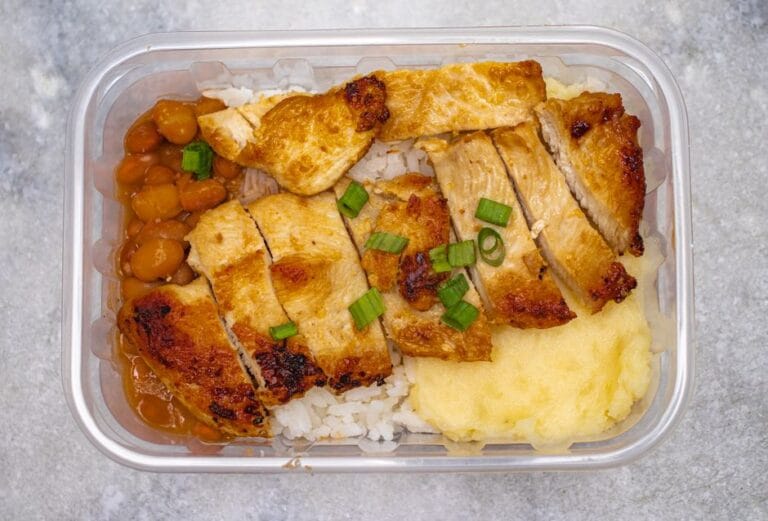
High-Protein Chicken and Rice Meal Prep Bowls
A simple, high-protein meal prep base built on grilled chicken breast, rice, and roasted vegetables, delivering roughly 40g of protein per serving.
☆☆☆☆☆
Ingredients
- 2.5 lbs boneless skinless chicken breast
- 2 tbsp olive oil, divided
- 1 tsp garlic powder, 1 tsp paprika, 1 tsp onion powder, salt and pepper to taste
- 2 cups uncooked jasmine or basmati rice
- 1.5 lbs broccoli florets or mixed vegetables
- 1 tbsp soy sauce or coconut aminos (optional, for the vegetables)
- Lemon wedges, for serving (optional)
Instructions
- Step 1. Preheat oven to 425°F. Pat chicken breasts dry, rub with 1 tbsp olive oil, and season with garlic powder, paprika, onion powder, salt, and pepper.
- Step 2. Bake chicken for 20-25 minutes until internal temperature reaches 165°F. Let rest 5 minutes before slicing.
- Step 3. While the chicken bakes, cook rice according to package directions.
- Step 4. Toss the broccoli or mixed vegetables with the remaining 1 tbsp olive oil and soy sauce, spread on a sheet pan, and roast for 15-18 minutes until tender and lightly browned.
- Step 5. Divide rice, roasted vegetables, and sliced chicken evenly across 5 containers. Add a lemon wedge to each if using.
This base gives you five ready-to-go lunches or dinners with almost no daily effort — reheat, add a sauce if you want variety, and you're done.
Four more high-protein swaps to rotate through the week
- Ground turkey taco bowls — brown 2 lbs of 93% lean ground turkey with taco seasoning, and pair with rice, black beans, and salsa for roughly 38g of protein per serving.
- Baked salmon and quinoa — salmon fillets baked at 400°F for 12-15 minutes over cooked quinoa and roasted asparagus, for a lighter but still protein-dense option around 35g per serving.
- Egg white and turkey sausage muffin cups — whisk egg whites with diced turkey sausage and spinach, bake in a muffin tin at 350°F for 18-20 minutes, for a grab-and-go breakfast at roughly 20g of protein per two muffins.
- Greek yogurt protein bowls — full-fat or 2% Greek yogurt with berries, a scoop of protein granola, and a drizzle of honey; no cooking required and about 25g of protein per bowl.
How to keep it from getting boring
Rotate your sauce, not your base — a jar of chimichurri one day, a spicy peanut sauce the next, and a squeeze of lemon with herbs the day after turns the exact same chicken-and-rice bowl into what feels like three different meals. Changing your carb (rice one week, quinoa or roasted sweet potato the next) and your vegetable also goes a long way without adding real prep time.
Batch cooking tips that save the most time
Cook your protein and your starch at the same time using the oven and stovetop (or oven and rice cooker) simultaneously rather than sequentially — this is the single biggest time-saver in a meal prep session. Roast vegetables on a sheet pan alongside your protein whenever oven space allows, and portion everything into containers while it's still warm so you're not handling hot food twice.
Storage and reheating
Store finished bowls in the fridge for up to 4 days; for the back half of the week, freeze 2-3 portions and thaw them in the fridge overnight before reheating. Reheat chicken and rice together with a splash of water or broth to prevent drying out, and add any cold components (yogurt, fresh greens, sauces) after reheating rather than before.
The takeaway
A week of high-protein eating doesn't require five different recipes — one solid base (like the chicken and rice bowl above), a rotation of two or three protein swaps, and a handful of different sauces is enough to hit your protein target every day without repeating the exact same meal. Batch the cooking once, and the rest of the week takes care of itself.
Frequently asked questions
How much protein should each meal prep container have?
Most people aiming for a high-protein diet target 30-40g of protein per meal, which the chicken and rice bowl above comfortably covers — adjust portion size for your specific goals.
Can I meal prep high-protein breakfasts too, not just lunch and dinner?
Yes — egg muffin cups and Greek yogurt bowls both prep well and require little to no cooking, making them an easy way to extend high-protein meal prep across the whole day.
How long does high-protein meal prep actually last in the fridge?
Most cooked chicken, turkey, or salmon-based meals stay good for 4 days refrigerated; if you're prepping for a full week, freeze the extra portions instead of pushing the fridge shelf life further.
Is meal prepping actually cheaper for high-protein eating?
Usually yes — buying chicken breast, eggs, and Greek yogurt in bulk and cooking once is typically cheaper per serving than buying pre-made high-protein meals or eating out to hit the same protein target.
Read next
The step most people skip
Baking chicken breast at 425°F for a shorter time consistently keeps it juicier through a week of reheats than a lower, longer roast does, because the shorter total heat exposure gives the meat less time to push out moisture even though the final internal temperature is the same either way. Portioning bowls while the rice and chicken are still warm — rather than letting everything cool on the counter first — measurably cuts total prep session time, since warm food packs into containers faster and doesn’t need a separate cooling step before the fridge.
Further reading & trusted sources
Emma thinks a recipe has failed if it needs a long backstory before the ingredients — so hers get straight to the point, with the small technique notes that actually change how a dish turns out. She leads The Nourish Kitchen’s recipes and food guides, writing each one to work in a real, busy kitchen rather than a photo studio. AI tools help with research and drafting, and a human checks every recipe for clarity and food safety before it publishes. Nutrition figures are honest estimates, never guarantees.