 By Emma Hartley, Food Editor
Reviewed & updated September 2026
Meal prepping is often sold as a way to eat healthier, but it's just as powerful as a way to eat cheaper — a batch of the right staples can bring your per-meal cost well under $2 without living on plain rice and chicken breast. This formula leans on the ingredients that give you the most nutrition and flavor per dollar, then shows you how to stretch them into a full week.
 What this guide coversCurated by Emma · 8 min read
The budget staples that do the heavy lifting
- Chicken thighs instead of chicken breast — usually 30-40% cheaper per pound, more forgiving to cook (harder to dry out), and arguably more flavorful.
- Canned or dried beans — one of the cheapest protein sources per gram available, and they bulk up a meal without needing more meat.
- Rice, in bulk — a 10-lb bag of rice can cost less per serving than almost any other base, and it freezes and reheats well.
- Frozen vegetables — often cheaper than fresh, especially out of season, with comparable nutrition since they're frozen at peak ripeness.
- Eggs — a genuinely cheap complete protein that works for breakfast, lunch, or as a topping for a rice-and-bean bowl.
- Canned tomatoes and basic spices — the cheapest way to turn plain staples into something that actually tastes like a meal instead of diet food.
The base recipe: budget chicken, rice, and bean bowls
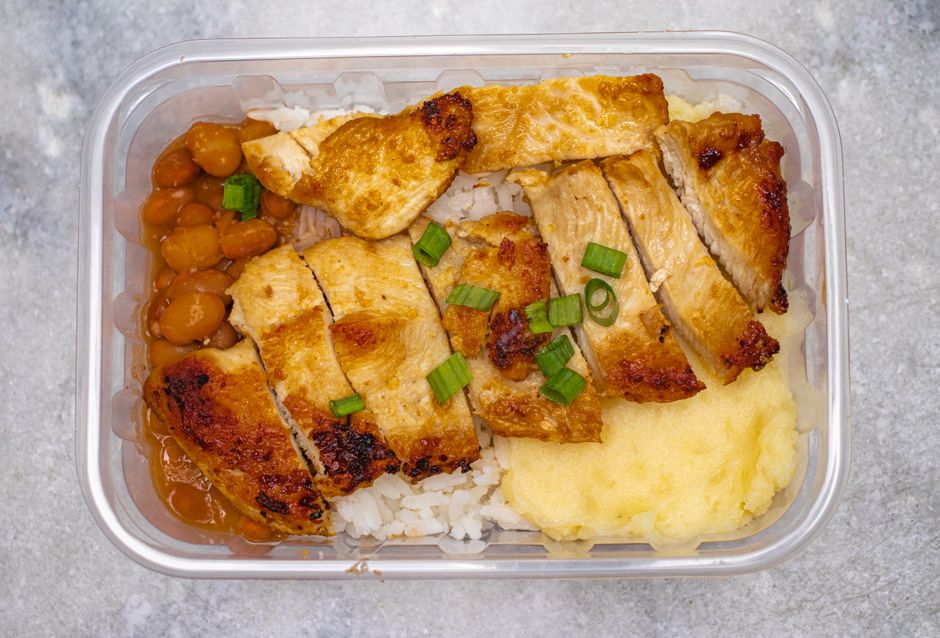
Budget Chicken, Rice, and Bean Meal Prep Bowls
A cheap, high-protein meal prep formula built on chicken thighs, rice, canned beans, and frozen vegetables that comes in well under $2 per serving.
☆☆☆☆☆
Ingredients
- 2 lbs boneless skinless chicken thighs
- 1 tbsp oil
- 1 tsp paprika, 1 tsp garlic powder, 1 tsp cumin, salt and pepper to taste
- 2 cups uncooked long-grain rice
- 2 (15 oz) cans black beans, drained and rinsed
- 4 cups frozen mixed vegetables (broccoli, corn, or bell pepper blend)
- 2 tbsp oil, for sauteing vegetables
- 1 lime, juiced (optional, for serving)
- Hot sauce or salsa, to taste (optional, for serving)
Instructions
- Step 1. Season chicken thighs with paprika, garlic powder, cumin, salt, and pepper. Heat 1 tbsp oil in a large skillet over medium-high heat and cook the thighs 5-7 minutes per side until browned and cooked through (internal temp 165°F). Rest 5 minutes, then slice or dice.
- Step 2. While the chicken cooks, prepare rice according to package directions (about 2 cups uncooked rice to 3.5-4 cups water, simmered covered until tender).
- Step 3. Heat 2 tbsp oil in a separate pan over medium heat and saute the frozen vegetables for 5-7 minutes until heated through and slightly caramelized at the edges.
- Step 4. Warm the drained black beans in a small pot or the microwave, or add them straight to the pan with the vegetables for the last 2 minutes to pick up flavor.
- Step 5. Divide rice, beans, vegetables, and chicken evenly across 6 containers. Squeeze lime juice over each if using, and store hot sauce or salsa separately to add when reheating.
This base costs roughly $10-11 total for 6 servings depending on local prices — chicken thighs and rice are the main drivers, with beans and frozen vegetables adding bulk and nutrition for very little.
How to stretch it further across the week
- Turn leftovers into a different meal. The same bowl base becomes a burrito (wrapped in a tortilla), a soup (add broth and simmer), or a stuffed pepper (halved bell pepper, filled and baked) without buying anything new.
- Add a fried or hard-boiled egg on top for a few extra cents per serving to boost protein and change the texture from the day before.
- Buy spices in bulk or from a bulk bin rather than name-brand jars — the per-use cost is a fraction of the pre-packaged version.
- Cook a double batch of rice and freeze half. Rice freezes and reheats extremely well, so cooking a bigger batch once saves both time and, often, money if rice is on sale.
Other cheap swaps to keep costs down
- Ground turkey or a lentil-and-ground-meat blend instead of all meat — lentils are cheaper than meat by weight and add fiber, and the blend is hard to notice in a well-seasoned dish.
- Canned tuna or canned salmon as an occasional lower-cost protein swap for a rice bowl or salad.
- In-season produce for any fresh vegetables you add — it's consistently cheaper and fresher than out-of-season options.
- Store-brand canned and dried goods — beans, rice, and canned tomatoes rarely differ in quality between name brands and store brands.
Storage and reheating tips
Store components in airtight containers in the fridge for up to 4-5 days; if you're prepping for the full week, freeze half the batch and thaw it partway through the week so nothing goes to waste. Reheat rice with a splash of water to keep it from drying out, and add fresh toppings (lime, hot sauce, herbs) after reheating rather than before, since they lose flavor sitting in the fridge for days.
The takeaway
Cheap meal prep doesn't mean bland or repetitive — building your week around a few high-value staples (chicken thighs, rice, beans, frozen vegetables) and rotating how you season and serve them keeps costs under $2 a serving while still giving you real variety across the week.
Frequently asked questions
Is meal prepping actually cheaper than just cooking each meal separately?
Usually yes, mainly because buying staples in bulk (a big bag of rice, a family pack of chicken thighs) is cheaper per unit than buying smaller quantities repeatedly, and cooking once means less food waste from unused partial ingredients.
Can I make this vegetarian and keep it this cheap?
Yes — double the beans or add lentils in place of the chicken, which are often even cheaper per serving than chicken thighs while still delivering solid protein.
How do I keep budget meal prep from getting boring?
Rotate your spice blend (Tex-Mex one week, curry powder the next, Italian herbs after that) and your serving format (bowl, wrap, soup, stuffed pepper) using the same base ingredients — the cost stays low while the flavor changes significantly.
What's the single best money-saving swap in this recipe?
Chicken thighs instead of chicken breast — they're typically 30-40% cheaper per pound, harder to overcook, and work in the same recipes breast does.
Read next

Further reading & trusted sources
Where recipes usually go wrong
Chicken thighs stay noticeably more tender than breast across a full week of fridge reheats because their higher fat content buffers against the moisture loss that repeated microwaving causes, which is a bigger factor in day-4 texture than any reheating technique. Buying dried beans instead of canned cuts the per-serving cost further still, but the trade-off is a soak-and-simmer step most people underestimate the time for — canned beans are the better default for anyone actually trying to stay on a weekly prep schedule.
Emma thinks a recipe has failed if it needs a long backstory before the ingredients — so hers get straight to the point, with the small technique notes that actually change how a dish turns out. She leads The Nourish Kitchen’s recipes and food guides, writing each one to work in a real, busy kitchen rather than a photo studio. AI tools help with research and drafting, and a human checks every recipe for clarity and food safety before it publishes. Nutrition figures are honest estimates, never guarantees.