 By Emma Hartley, Food Editor
Reviewed & updated September 2026
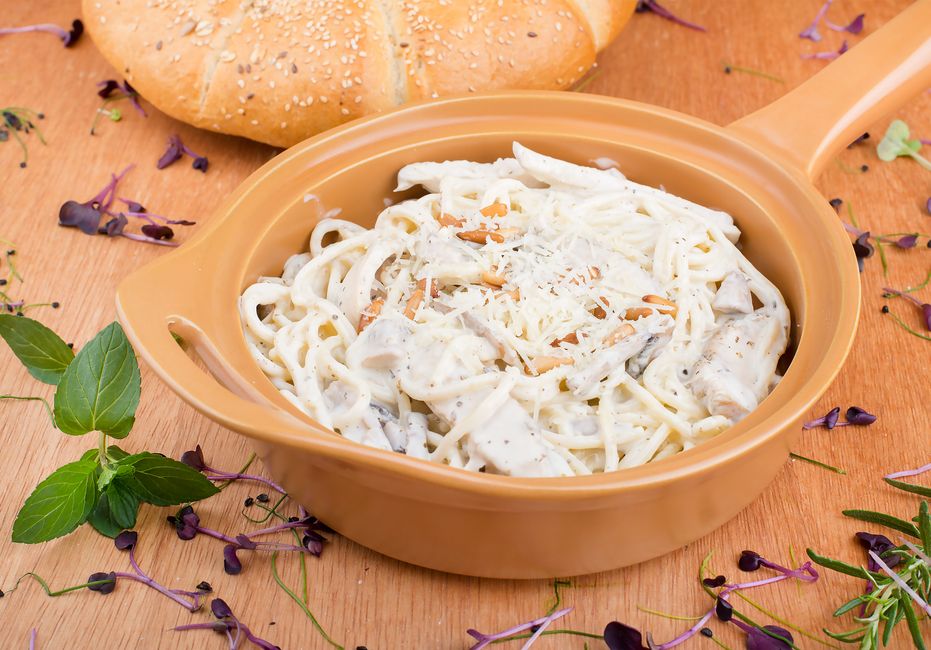
Creamy chicken Alfredo is the ultimate comfort-food pasta: silky parmesan cream sauce clinging to tender fettuccine and golden, juicy chicken. It tastes like a restaurant indulgence, but it comes together in one pan in about 30 minutes — no jarred sauce in sight. Once you've made the real thing, the bottled stuff genuinely tastes like a different (and worse) dish.
The homemade Alfredo sauce is rich, garlicky, and deeply savoury, and once you see how easy it is, you'll never go back to the bottled kind.
 What you’ll find insideCurated by Emma · 7 min read
Why you'll love this recipe
- Restaurant-worthy. A luxurious, creamy sauce made from scratch.
- 30 minutes. Faster than takeout and far more satisfying.
- One pan for the sauce. Easy cooking, easy cleanup.
The cheese rule that saves you from a grainy sauce
The number-one thing that goes wrong with homemade Alfredo is a grainy, clumpy, or split sauce — and it comes down to the Parmesan. Two rules prevent it every time. First, grate your own Parmesan from a block. Pre-shredded "Parmesan" in a bag is coated with anti-caking agents (cellulose) that stop it melting smoothly; it clumps into gritty bits instead of dissolving into silk. Freshly grated cheese from a wedge melts into a glossy, cohesive sauce. It takes two minutes and it's the single biggest difference-maker. Second, keep the heat gentle when the cheese goes in. Parmesan seizes and turns grainy when it hits sauce that's too hot or rapidly boiling — the proteins tighten and squeeze out the fat. So pull the cream down to a bare, gentle simmer (or even off the heat), then whisk the cheese in gradually, a handful at a time, stirring constantly until each addition melts before adding more. Fresh cheese plus low, patient heat gives you the smooth, luxurious Alfredo you're after.
Tips for the best results
Use freshly grated Parmesan, not the pre-shredded kind, which doesn't melt as smoothly. Keep the heat gentle when adding the cheese so the sauce stays silky. Reserve some pasta water to loosen the sauce, and season the chicken well for the most flavour.
Creamy Chicken Alfredo Pasta
Tender chicken and fettuccine in a rich, garlicky homemade parmesan cream sauce.
☆☆☆☆☆
Ingredients
- 12 oz (340 g) fettuccine
- 2 boneless chicken breasts
- 1/2 tsp salt, plus more to taste
- 1/4 tsp black pepper
- 1/2 tsp garlic powder
- 2 tbsp olive oil
- 4 tbsp butter
- 4 cloves garlic, minced
- 1.5 cups heavy cream
- 1.5 cups freshly grated Parmesan
- Fresh parsley, to serve
Instructions
- Step 1. Cook the fettuccine in salted water until al dente. Reserve 1/2 cup pasta water, then drain.
- Step 2. Season the chicken with salt, pepper, and garlic powder. Sear in the olive oil over medium-high heat, 5-6 minutes per side, until golden and cooked through. Rest, then slice.
- Step 3. In the same pan, melt the butter over medium-low heat and cook the garlic 30 seconds until fragrant.
- Step 4. Pour in the cream and bring to a gentle simmer. Whisk in the Parmesan until smooth, loosening with a splash of pasta water if needed.
- Step 5. Add the drained pasta and toss to coat. Top with the sliced chicken and parsley, and serve immediately.
Save your pasta water (the cook's secret weapon)
Before you drain the pasta, scoop out a cup of the starchy cooking water — it's the secret to a restaurant-smooth Alfredo and the step most home cooks forget. That cloudy water is full of dissolved starch, and a splash of it does two things a plain liquid can't: it loosens a sauce that's gotten too thick into a silky, pourable consistency, and the starch helps the sauce emulsify and cling to the pasta rather than sliding off or pooling. Add it a little at a time as you toss the pasta in the sauce, until everything is glossy and coats each strand. It's also your rescue if the sauce ever looks like it's tightening or threatening to break — a splash of warm pasta water whisked in often brings it right back together. Finally, serve Alfredo immediately: the sauce is at its silkiest hot from the pan and thickens quickly as it cools, so this is a dish to plate and eat straight away rather than let sit. Freshly grated cheese, gentle heat, and a splash of pasta water — that's the holy trinity of a perfect Alfredo.
Make it your own
Add sautéed mushrooms or broccoli, stir in baby spinach at the end, or finish with a pinch of red pepper flakes. Swap chicken for shrimp, or skip the protein for a classic fettuccine Alfredo.
Frequently asked questions
Why is my sauce grainy? Pre-grated cheese or too much heat can cause it. Use freshly grated Parmesan from a block and add it over gentle heat (off a hard boil), stirring constantly.
Can I make it lighter? Use half-and-half in place of some of the cream, though the sauce will be a little thinner. A splash of pasta water helps it cling.
How do I store leftovers? Refrigerate up to 3 days. Reheat gently with a splash of milk or cream to bring the sauce back together.
What does pasta water do? Its dissolved starch loosens and emulsifies the sauce so it turns silky and clings to the pasta. Save a cup before draining and add a splash as you toss.
Why did my Alfredo sauce break or get oily? Too much heat caused the cheese and cream to split. Keep the heat low, add cheese gradually off a boil, and whisk in a splash of pasta water to bring it back together.
Read next
Related articles
- Creamy Tomato Basil Pasta (20-Minute Weeknight Dinner)
- Easy Chicken Tikka Masala (Restaurant-Style at Home)
- Sheet Pan Chicken Fajitas (20-Minute Dinner)
- Easy One-Pot Chicken and Rice
- Easy Slow Cooker Pot Roast
- Marry Me Chicken (Creamy Sun-Dried Tomato)
Further reading & trusted sources
The step most people skip
Alfredo splits when the heat’s too high. Pull the pan off the burner before the cheese goes in and let the residual warmth melt it into the starchy pasta water — that’s what keeps it silky, not grainy.
Emma thinks a recipe has failed if it needs a long backstory before the ingredients — so hers get straight to the point, with the small technique notes that actually change how a dish turns out. She leads The Nourish Kitchen’s recipes and food guides, writing each one to work in a real, busy kitchen rather than a photo studio. AI tools help with research and drafting, and a human checks every recipe for clarity and food safety before it publishes. Nutrition figures are honest estimates, never guarantees.