 By Emma Hartley, Food Editor
Reviewed & updated September 2026
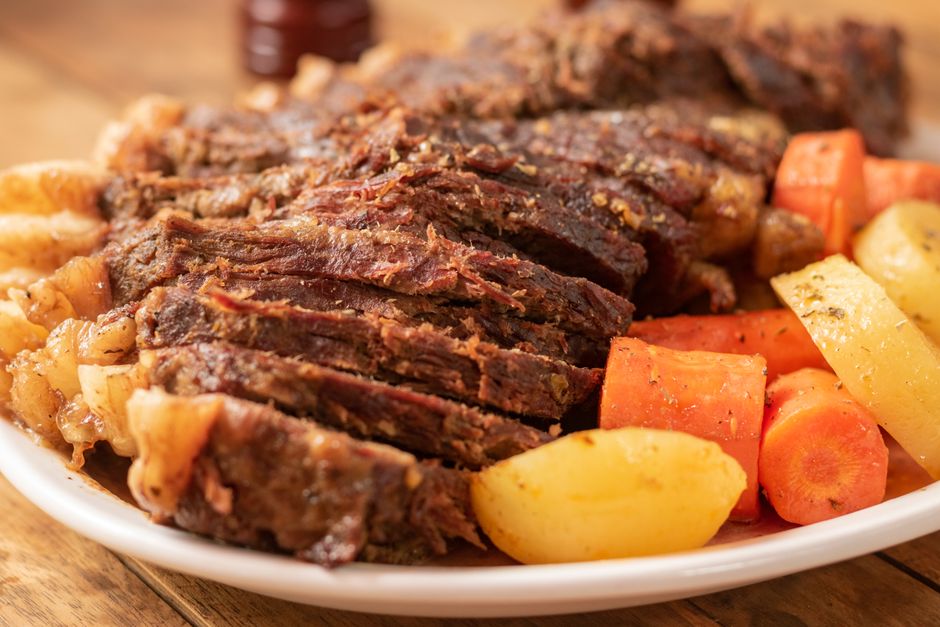
A good pot roast is one of those dinners that feels like it took real effort when really the slow cooker did almost all of the work. This version leans on a simple sear, a handful of pantry staples, and low-and-slow time to turn an inexpensive cut of beef into something fall-apart tender with a rich, savory gravy built right in.
 What you’ll find insideCurated by Emma · 9 min read
Why the slow cooker is the right tool here
Pot roast cuts — chuck roast especially — are full of connective tissue that's tough at a quick cook but turns into gelatin over hours of low, moist heat, which is exactly what makes the meat fall apart tender and gives the gravy its body. A slow cooker holds that low temperature for you for six to nine hours without any attention, which is the whole appeal on a weeknight or a lazy Sunday.
Choosing the right cut
Chuck roast is the standard choice for a reason: it has the fat and connective tissue that break down beautifully over a long cook. Bottom round or rump roast will also work but come out slightly less rich since they're leaner — if you use one of those, consider adding an extra tablespoon of butter to the sear for flavor.
Ingredients
- 3-4 lb chuck roast
- 2 tablespoons olive oil
- Salt and black pepper, to season generously
- 1 large yellow onion, quartered
- 4 cloves garlic, smashed
- 4 large carrots, cut into 2-inch chunks
- 1.5 lbs baby potatoes, halved if large
- 2 cups beef broth
- 2 tablespoons tomato paste
- 1 tablespoon Worcestershire sauce
- 1 teaspoon dried thyme
- 1 teaspoon dried rosemary
- 2 bay leaves
- 2 tablespoons cornstarch mixed with 2 tablespoons cold water (for the gravy at the end)
Step-by-step method
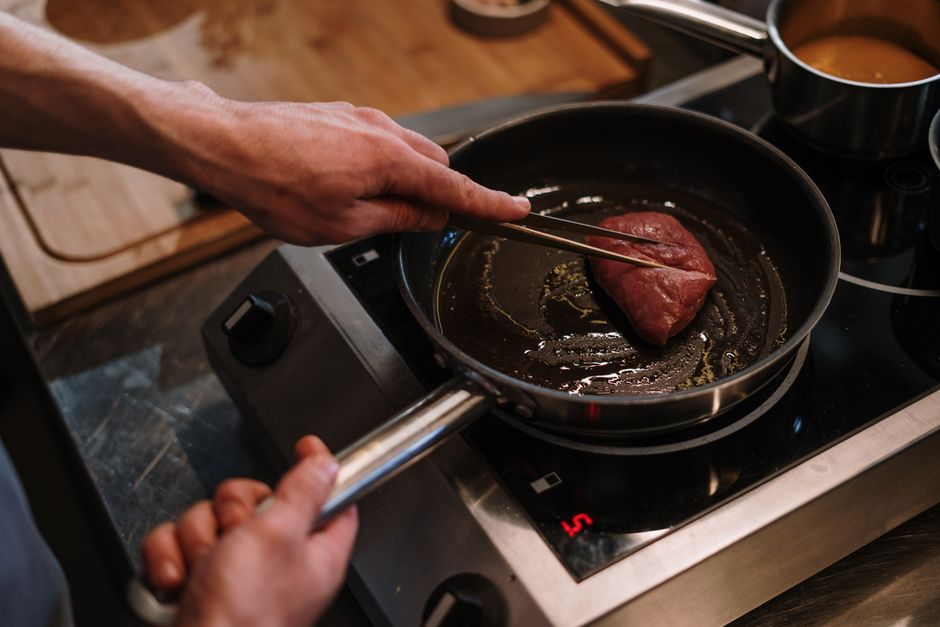
- Sear the roast. Pat the chuck roast dry and season generously with salt and pepper on all sides. Heat the olive oil in a skillet over high heat and sear the roast for 3-4 minutes per side until deeply browned. This step isn't optional if you want real flavor — it builds the base of the gravy.
- Layer the vegetables. Place the onion, garlic, carrots, and potatoes in the bottom of the slow cooker.
- Add the roast. Set the seared roast on top of the vegetables.
- Build the liquid. Whisk the beef broth, tomato paste, and Worcestershire sauce together and pour over the roast. Scatter the thyme, rosemary, and bay leaves on top.
- Cook low and slow. Cover and cook on low for 8-9 hours, or high for 5-6 hours, until the meat shreds easily with a fork.
- Thicken the gravy. Remove the roast and vegetables to a platter. Pour the cooking liquid into a saucepan, bring to a simmer, and whisk in the cornstarch slurry. Simmer 2-3 minutes until thickened into a gravy.
- Serve. Shred or slice the roast, spoon the vegetables alongside, and pour the gravy generously over the top.
Getting the texture right
The single most common mistake with pot roast is pulling it too early because it "looks done." Chuck roast actually needs to go past the point where it's technically safe to eat (which is much earlier) and cook long enough for the connective tissue to fully break down — that's usually the full 8-9 hours on low, not less. If it's still tough or chewy rather than shreddable, it needs more time, not less; there's no way to fix an under-cooked pot roast except returning it to heat.
Variations worth trying
- Red wine pot roast: swap one cup of the beef broth for dry red wine for a deeper, slightly sweet gravy.
- Balsamic pot roast: add 2 tablespoons of balsamic vinegar to the liquid for tang that cuts through the richness.
- Mississippi-style: add a packet of ranch seasoning, a packet of au jus mix, and a few pepperoncini peppers with their brine for a tangy, popular variation.
- Root vegetable swap: parsnips or turnips work well in place of some of the potatoes if you want more variety.
Storage and reheating
Pot roast keeps well and often tastes even better the next day once the flavors settle. Store in an airtight container with some of the gravy spooned over the meat (this keeps it from drying out) for up to 4 days in the fridge, or freeze for up to 3 months. Reheat gently on the stovetop or in the microwave with a splash of extra broth to loosen the gravy back up.
What to serve alongside
Since the potatoes and carrots cook right in the pot, this is genuinely a one-pot meal on its own. If you want to round it out, a simple green salad or steamed green beans add freshness against the richness of the gravy, and crusty bread is excellent for soaking up any extra sauce.
The takeaway
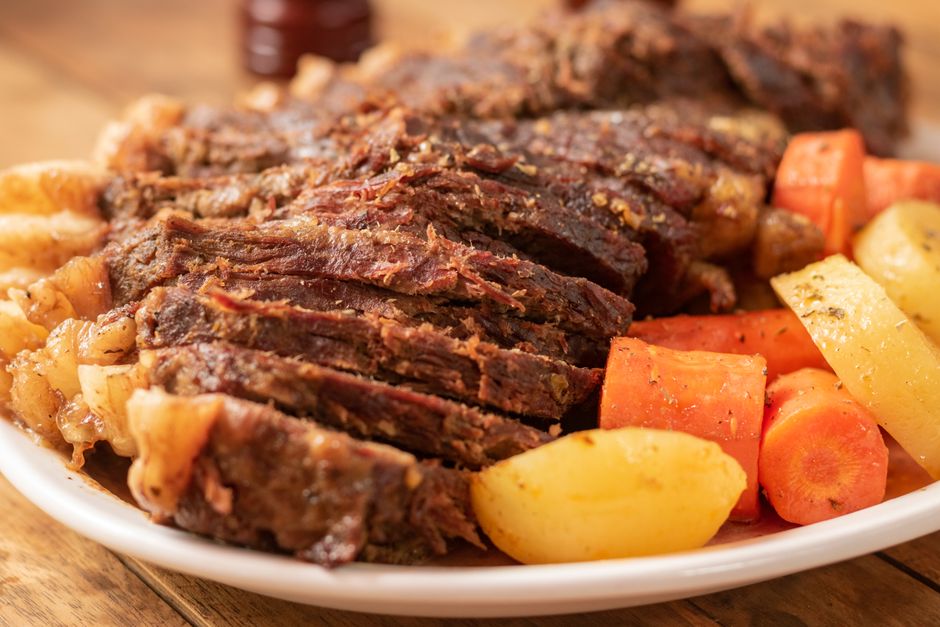
Slow cooker pot roast rewards patience more than skill — sear the meat properly, give it the full low-and-slow cook time without rushing, and finish the gravy with a real simmer rather than serving the liquid thin. The result is a genuinely comforting, mostly hands-off dinner that scales easily for leftovers.
Easy Slow Cooker Pot Roast
A fall-apart tender chuck roast slow-cooked with carrots, potatoes, and a rich savory gravy.
☆☆☆☆☆
Ingredients
- 3-4 lb chuck roast
- 2 tablespoons olive oil
- Salt and black pepper, to taste
- 1 large yellow onion, quartered
- 4 cloves garlic, smashed
- 4 large carrots, cut into 2-inch chunks
- 1.5 lbs baby potatoes, halved if large
- 2 cups beef broth
- 2 tablespoons tomato paste
- 1 tablespoon Worcestershire sauce
- 1 teaspoon dried thyme
- 1 teaspoon dried rosemary
- 2 bay leaves
- 2 tablespoons cornstarch mixed with 2 tablespoons cold water
Instructions
- Step 1. Pat the chuck roast dry, season generously with salt and pepper, and sear in olive oil over high heat 3-4 minutes per side until deeply browned.
- Step 2. Place onion, garlic, carrots, and potatoes in the bottom of the slow cooker.
- Step 3. Set the seared roast on top of the vegetables.
- Step 4. Whisk beef broth, tomato paste, and Worcestershire sauce together and pour over the roast; scatter thyme, rosemary, and bay leaves on top.
- Step 5. Cover and cook on low 8-9 hours or high 5-6 hours, until the meat shreds easily.
- Step 6. Remove roast and vegetables; simmer the cooking liquid with the cornstarch slurry 2-3 minutes until thickened into gravy.
- Step 7. Shred or slice the roast, plate with vegetables, and pour gravy over the top.
Frequently asked questions
Can I make this on high heat if I'm short on time?
Yes, cook on high for 5-6 hours instead of low for 8-9. Low and slow gives slightly more tender results, but high heat still works well if the roast reaches the point of shredding easily.
Do I really need to sear the roast first?
It's strongly recommended. Searing builds a deep, browned flavor base that the slow cooker's moist heat can't create on its own — skipping it results in a noticeably flatter-tasting gravy and meat.
What's the best cut of beef for pot roast?
Chuck roast is the standard choice because its fat and connective tissue break down into tender, rich meat over a long cook. Bottom round or rump roast work as leaner alternatives but come out slightly less rich.
Can I freeze leftover pot roast?
Yes, store it with some gravy in an airtight, freezer-safe container for up to 3 months. Thaw in the fridge overnight and reheat gently on the stovetop with a little extra broth to restore the gravy's texture.
Read next

Related articles
- Sheet Pan Chicken Fajitas (20-Minute Dinner)
- Easy One-Pot Chicken and Rice
- Marry Me Chicken (Creamy Sun-Dried Tomato)
- “Juicy Air Fryer Chicken Breast (Never Dry Again)”
- Korean Ground Beef Bowl (15-Minute Dinner)
- Creamy Chicken Alfredo Pasta
Further reading & trusted sources
The detail that makes the difference
The most common pot roast mistake is pulling it the moment it looks ‘done,’ when chuck actually needs to cook well past that point for the connective tissue to fully break down into gelatin. If it’s still chewy at the 6-hour mark, the fix is always more time on low, never less — there’s no way to rescue an under-cooked pot roast except returning it to heat.
Emma thinks a recipe has failed if it needs a long backstory before the ingredients — so hers get straight to the point, with the small technique notes that actually change how a dish turns out. She leads The Nourish Kitchen’s recipes and food guides, writing each one to work in a real, busy kitchen rather than a photo studio. AI tools help with research and drafting, and a human checks every recipe for clarity and food safety before it publishes. Nutrition figures are honest estimates, never guarantees.