 By Emma Hartley, Food Editor
Reviewed & updated September 2026
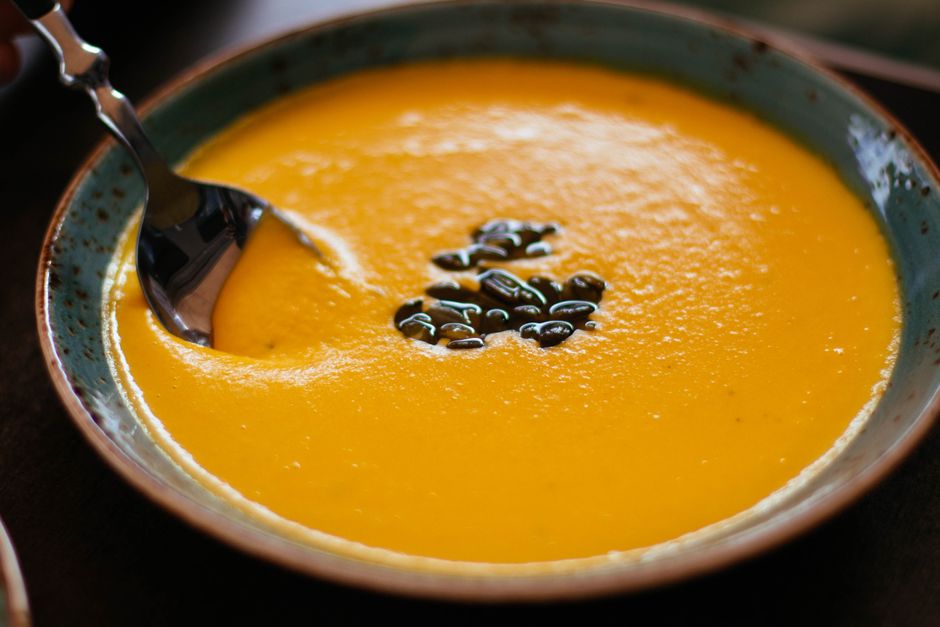
Silky, golden, and gently sweet, roasted butternut squash soup is autumn in a bowl. Roasting the squash first caramelises its natural sugars, giving the soup a deep, rich flavour that tastes far more complex than its short ingredient list suggests. It's the soup I make on the first proper cold weekend every year, and a swirl of cream and a sprinkle of seeds make it feel restaurant-worthy.
It's naturally vegetarian, easily made vegan, and freezes like a dream — a cosy staple worth making on repeat all season long.
 Jump to a sectionCurated by Emma · 7 min read
Why you'll love this recipe
- Velvety and cosy. Pure comfort in a golden bowl.
- Naturally healthy. Loaded with vitamins, light yet satisfying.
- Freezer-friendly. Make a big batch for the season.
Roasting, not boiling, is the whole secret
There are two ways to cook the squash for this soup, and they produce completely different results — so this is the one step not to shortcut. Boiling the squash in broth is faster, but it gives you a soup that tastes flat, watery, and a bit one-dimensional. Roasting it first is what makes this soup taste like it came from a restaurant. Here's why: roasting drives off moisture and, more importantly, caramelises the squash's natural sugars (the Maillard and caramelisation reactions), developing deep, nutty, sweet-savoury notes that boiling simply can't create. The golden, slightly browned edges on roasted squash are pure concentrated flavour. The same goes for the aromatics — roast the onion and garlic right alongside the squash (the garlic in its skin, squeezed out soft and sweet afterwards), and they turn jammy and mellow instead of sharp. Yes, roasting adds 40 minutes, but it's hands-off oven time, and it's the entire reason a four-ingredient soup tastes so complex. Don't skip it.
Tips for the best results
Roasting (rather than boiling) the squash is the key to deep, caramelised flavour — don't skip it. Roast the onion and garlic alongside for sweetness. Blend until completely smooth for that signature silky texture, and thin with extra broth to your preferred consistency.
Roasted Butternut Squash Soup
Silky, gently sweet soup made by roasting butternut squash for deep caramelized flavor.
☆☆☆☆☆
Ingredients
- 1 large butternut squash (about 3 lb), halved and seeded
- 1 onion, quartered
- 4 cloves garlic, unpeeled
- 2 tbsp olive oil
- 3 cups vegetable broth
- 1/2 tsp cinnamon
- 1/4 tsp nutmeg
- 1/2 cup cream or coconut milk
- Salt and pepper, toasted seeds to garnish
Instructions
- Step 1. Preheat the oven to 400°F (205°C). Rub the squash halves and onion with olive oil and place cut-side down on a sheet pan with the garlic cloves. Roast 40-45 minutes until very tender.
- Step 2. Scoop the squash flesh into a pot, add the onion, and squeeze in the roasted garlic.
- Step 3. Add the broth, cinnamon, nutmeg, salt, and pepper, and bring to a simmer.
- Step 4. Blend until completely smooth with an immersion blender, adding more broth to reach your desired thickness.
- Step 5. Stir in the cream off the heat, taste, and adjust. Serve with a swirl of cream and toasted seeds.
Blend it silky, season to balance, and dress it up
A few finishing touches make this soup feel genuinely special. Blend it until completely, perfectly smooth — that velvety, lump-free texture is signature to a great squash soup, so let your immersion blender run longer than feels necessary (or use a countertop blender, carefully and in batches, for the silkiest result), and thin with extra broth to your preferred consistency. Then balance the seasoning thoughtfully: squash is sweet, so it needs enough salt to keep it savoury, while the warm spices (cinnamon, nutmeg, or a pinch of curry powder or ginger) enhance its natural sweetness without tipping it into dessert territory. Add the cream off the heat so it stays smooth, and taste at the end — a squeeze of lemon or a splash of vinegar can brighten it if it tastes too sweet or flat. Finally, the garnishes do real work here: a swirl of cream, toasted pumpkin or squash seeds, crispy sage, croutons, or a drizzle of chilli oil add the contrasting texture and visual pop that turn a humble blended soup into something that looks like it came from a bistro. It freezes beautifully (before adding cream) for a whole season of cosy lunches.
Make it your own
Add a peeled apple or carrot for extra sweetness, a knob of fresh ginger for warmth, or a pinch of curry powder for a different spin. Make it fully vegan with coconut milk, and top with croutons, crispy sage, or a drizzle of chilli oil.
Frequently asked questions
Can I use pre-cut squash? Yes — bagged butternut cubes save time. Roast them until caramelised for the best flavour.
How do I make it without roasting? You can simmer cubed squash in the broth until tender, then blend — but roasting gives noticeably deeper, sweeter flavour, so it's worth the extra time.
Does it freeze well? Excellently — freeze before adding the cream for up to 3 months, then stir in cream when reheating.
Why is my squash soup bland? It was likely boiled rather than roasted, or under-seasoned. Roast the squash to caramelise it, and add enough salt (plus a squeeze of acid) to balance its natural sweetness.
How do I make it ultra smooth? Blend longer than you think you need to — an immersion blender works, but a countertop blender (in careful batches) gives the silkiest texture. Thin with broth to your preferred consistency.
Read next




Related articles
- Easy Sheet-Pan Salmon and Vegetables
- Greek Chicken Bowls (Easy Meal Prep)
- Crunchy Asian Chopped Salad
- Easy High-Protein Cottage Cheese Recipes
- Creamy White Chicken Chili (Easy One-Pot Recipe)
- Classic Chicken Noodle Soup from Scratch
Further reading & trusted sources
The detail that makes the difference
Roasting the squash instead of boiling it is the whole difference: boiling waters down the flavour, roasting concentrates and caramelises it. It’s 30 hands-off minutes the soup pays back completely.
Emma thinks a recipe has failed if it needs a long backstory before the ingredients — so hers get straight to the point, with the small technique notes that actually change how a dish turns out. She leads The Nourish Kitchen’s recipes and food guides, writing each one to work in a real, busy kitchen rather than a photo studio. AI tools help with research and drafting, and a human checks every recipe for clarity and food safety before it publishes. Nutrition figures are honest estimates, never guarantees.