 By Emma Hartley, Food Editor
Reviewed & updated September 2026
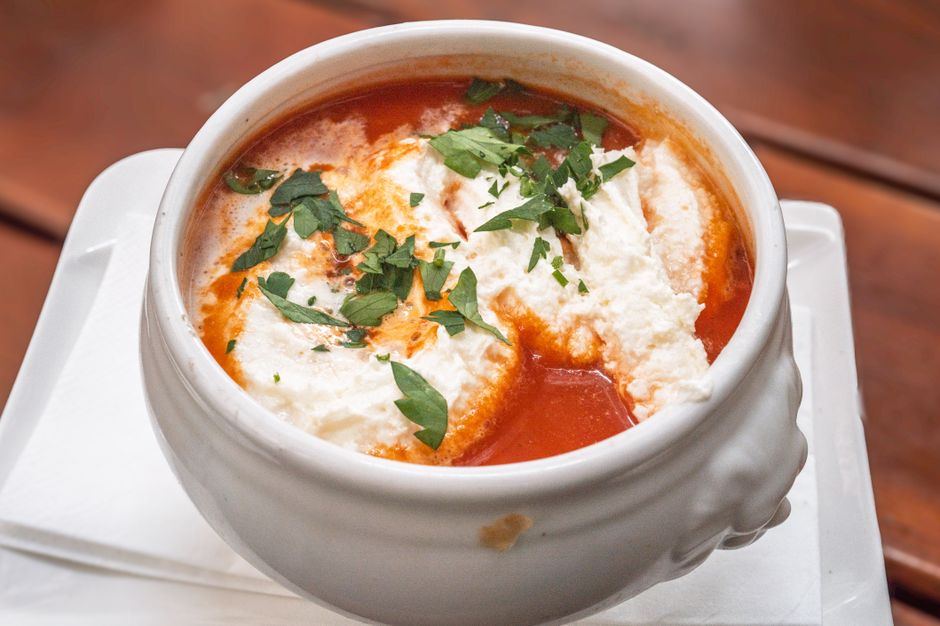
This creamy tomato soup is everything the canned version wishes it could be: velvety, rich, and full of bright, deep tomato flavour with just a hint of sweetness. It comes together in about 30 minutes from pantry staples and tastes like it simmered all day — especially when paired with a gooey grilled cheese for dunking, which is exactly how we eat it on rainy nights at our house.
It's the ultimate cosy lunch or starter, and it freezes beautifully, so a comforting bowl is always within reach.
 Jump to a sectionCurated by Emma · 7 min read
Why you'll love this recipe
- Better than canned. Richer, fresher, and barely more effort.
- Pantry-friendly. Mostly canned tomatoes and staples.
- Cosy classic. Made for grilled cheese dunking.
Two pantry tricks that make it taste like it simmered all day
This soup is mostly canned tomatoes, so a couple of small moves are what lift it from "fine" to "did you make this from scratch?" First, build a savoury base before the tomatoes go in. Sautéing the onion until soft and sweet, then the garlic for just a minute, creates a depth of flavour you simply can't get from dumping everything in a pot at once. Don't rush it — those few minutes of gentle cooking are the foundation of the whole soup. Second — and this is the one people miss — add a pinch of sugar. Canned tomatoes are quite acidic, and that sharp, tinny edge is exactly what makes cheap tomato soup taste "canned." A small spoonful of sugar doesn't make the soup sweet; it neutralises the harsh acidity and lets the rich, round tomato flavour come forward, the same way a pinch of salt makes things taste less bland. A good-quality can of whole peeled tomatoes (better than pre-crushed) plus these two tricks genuinely tastes like it cooked for hours. Taste at the end and balance: a little more sugar if it's sharp, a little more salt if it's flat.
Tips for the best results
Sautéing the onion and garlic builds a savoury base, and a pinch of sugar balances the tomatoes' acidity. Blend it smooth with an immersion blender for that signature velvety texture, and stir the cream in off the heat so it doesn't curdle. A handful of fresh basil at the end brightens everything.
Creamy Tomato Soup
Velvety, rich tomato soup from pantry staples — far better than canned.
☆☆☆☆☆
Ingredients
- 2 tbsp butter
- 1 onion, diced
- 3 cloves garlic, minced
- 2 (28 oz) cans whole peeled tomatoes
- 2 cups vegetable broth
- 1 tsp sugar
- 1/2 cup heavy cream
- 1/2 tsp salt, plus more to taste
- 1/4 cup fresh basil, plus more to serve
Instructions
- Step 1. Melt the butter in a large pot over medium heat. Add the onion and cook 5 minutes until soft, then add the garlic for 1 minute.
- Step 2. Add the canned tomatoes (with their juices), broth, sugar, and salt. Break up the tomatoes with a spoon.
- Step 3. Bring to a simmer and cook 15 minutes to develop the flavor.
- Step 4. Blend until smooth with an immersion blender (or carefully in a countertop blender).
- Step 5. Stir in the cream and basil off the heat. Taste, adjust salt, and serve with extra basil.
Blend it silky and add the cream off the heat
Two final techniques give this soup its luxurious, restaurant-smooth finish. For that velvety texture, blend it thoroughly — an immersion blender right in the pot is easiest, but a countertop blender gives an even silkier result (just work in batches, leave the lid vented and covered with a towel, and never fill it more than halfway with hot liquid, which can erupt dangerously). The longer you blend, the smoother it gets. Then add the cream off the heat. This matters: stirring cream into actively boiling, acidic soup can cause it to curdle into little flecks. Pull the pot off the burner, let it stop bubbling for a moment, then stir the cream in gently — it'll stay smooth and glossy. Fresh basil added at the very end keeps its bright, fresh aroma rather than cooking away. Serve with the obligatory grilled cheese for dunking, and freeze any leftovers before adding the cream (stir it in when reheating) for the best texture down the line.
Make it your own
Roast the tomatoes first for even deeper flavour, add a Parmesan rind while simmering, or stir in a spoonful of pesto. For a dairy-free version, use coconut milk or simply blend in a cooked potato for creaminess.
Frequently asked questions
Can I use fresh tomatoes? Yes, when they're in season and ripe — roast about 3 pounds first for the best flavour. Canned tomatoes are reliable year-round.
How do I make it thicker? Simmer longer to reduce, or blend in a handful of cooked rice or a small potato.
Does it freeze well? Beautifully — freeze before adding the cream, then stir in cream when reheating, for up to 3 months.
Why does my tomato soup taste sharp or tinny? That's the acidity of canned tomatoes. A pinch of sugar balances it (without making the soup sweet), and a savoury sautéed onion-and-garlic base rounds out the flavour.
Why did my cream curdle? It was added to soup that was too hot and acidic. Take the pot off the heat, let it stop boiling, then stir the cream in gently to keep it smooth.
Read next



Related articles
- Creamy White Chicken Chili (Easy One-Pot Recipe)
- Classic Chicken Noodle Soup from Scratch
- Hot Spinach Artichoke Dip
- The Best Homemade Guacamole
- Easy Chickpea Curry (Chana Masala)
- Creamy Mushroom Risotto
Further reading & trusted sources
The step most people skip
Add the cream off the heat so it doesn’t curdle against the acidic tomato. Bring the soup down a notch first, then stir the dairy in right at the end.
Emma thinks a recipe has failed if it needs a long backstory before the ingredients — so hers get straight to the point, with the small technique notes that actually change how a dish turns out. She leads The Nourish Kitchen’s recipes and food guides, writing each one to work in a real, busy kitchen rather than a photo studio. AI tools help with research and drafting, and a human checks every recipe for clarity and food safety before it publishes. Nutrition figures are honest estimates, never guarantees.