 By Emma Hartley, Food Editor
Reviewed & updated September 2026
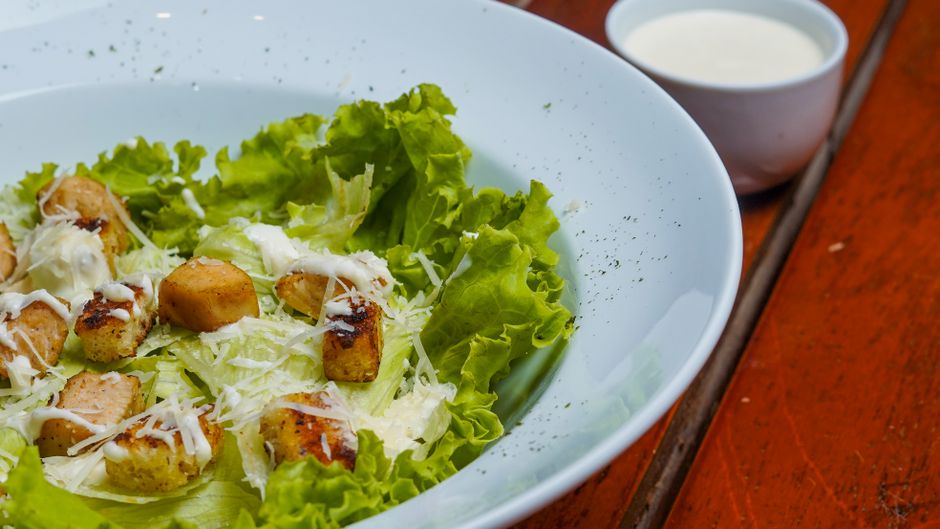
A great Caesar salad is a thing of beauty: crisp romaine coated in a creamy, garlicky, umami-rich dressing, topped with crunchy croutons and a snowfall of Parmesan. The store-bought bottle genuinely can't compare to a quick homemade dressing, which takes just minutes and tastes incomparably fresher and bolder — once you've made your own, the gloopy bottled stuff is hard to go back to.
Serve it as a starter, pile on grilled chicken or shrimp for a main, or bring it to the table alongside pasta night — it's a recipe everyone should have in their back pocket.
 What this guide coversCurated by Emma · 6 min read
Why you'll love this recipe
- Restaurant-quality dressing. Creamy, garlicky, and fresh.
- Quick. The dressing comes together in minutes.
- Versatile. A starter or a main with added protein.
The flavour secret most people skip: umami and a real garlic hit
What separates a Caesar that tastes like a restaurant's from one that tastes like "creamy salad" is savoury depth — and that comes from two ingredients people are often tempted to leave out. The first is anchovy. I know, I know — but please don't skip it. Mashed into the dressing, anchovy doesn't taste fishy at all; it dissolves into a deep, salty, savoury background note (pure umami) that makes the dressing taste rich and "complete." It's the single thing most homemade Caesars are missing. If you genuinely can't use it, Worcestershire sauce (which itself contains anchovy) and a few capers get you partway there. The second is proper garlic — fresh, minced, and assertive. Caesar should have a real garlicky punch; timid garlic makes for a flat dressing. Together, the anchovy and garlic, balanced by sharp lemon and salty Parmesan, are what create that addictive, can't-stop-eating-it quality. Make the dressing, then taste and adjust — more lemon to brighten, more anchovy/Worcestershire for depth, more Parmesan for richness — until it tastes bold rather than bland.
Tips for the best results
Use the inner, crisp romaine hearts and dry them thoroughly so the dressing clings. Make the dressing fresh and toss it just before serving for maximum crunch. For the best croutons, toast cubed bread in olive oil and garlic until deeply golden.
Classic Caesar Salad
Crisp romaine in a creamy, garlicky homemade Caesar dressing with croutons and Parmesan.
☆☆☆☆☆
Ingredients
- 2 large romaine hearts, chopped
- 1.5 cups croutons
- 1/2 cup shaved Parmesan
- Dressing: 1/3 cup mayonnaise, 2 tbsp lemon juice, 2 tsp Dijon mustard, 2 cloves garlic minced, 1 tsp Worcestershire sauce, 2 anchovy fillets minced (optional), 1/4 cup grated Parmesan, 2 tbsp olive oil, salt and black pepper
Instructions
- Step 1. Whisk together all the dressing ingredients until smooth and creamy. Thin with a splash of water if needed and taste for seasoning.
- Step 2. Wash and thoroughly dry the romaine, then chop into bite-size pieces.
- Step 3. Place the romaine in a large bowl and add about three-quarters of the dressing. Toss to coat evenly.
- Step 4. Add the croutons and shaved Parmesan and toss gently.
- Step 5. Serve right away with extra dressing and Parmesan on the side.
Dry the romaine, dress at the last minute, and make real croutons
Three small habits take this from good to great. First, dry the romaine thoroughly — a salad spinner is ideal — because dressing slides right off wet leaves and pools sadly at the bottom of the bowl, leaving the salad both watery and under-dressed. Dry leaves let the dressing cling to every surface. Second, dress it just before serving. Caesar dressing is heavy, and it wilts romaine quickly, so a salad dressed and left to sit turns limp; toss it at the last possible moment for that essential crisp-against-creamy contrast. Third, if you have ten extra minutes, make your own croutons — toss cubes of day-old bread with olive oil, a little garlic, and salt, and toast in a 375°F (190°C) oven until deeply golden. Homemade croutons are crunchier, more flavourful, and miles better than the dusty boxed kind, and they're a brilliant use for stale bread. These three touches are what make a homemade Caesar genuinely better than the restaurant version.
Make it your own
Top with grilled chicken, shrimp, or salmon for a main-course salad; add cherry tomatoes or avocado; or use kale for a heartier, make-ahead version. Skip the anchovies for a vegetarian dressing (a little extra Worcestershire or capers adds savouriness).
Frequently asked questions
Do I have to use anchovies? No — but they add the classic umami depth that makes Caesar taste "complete," and they don't taste fishy once mashed in. Worcestershire sauce and capers are a partial substitute.
Can I make the dressing ahead? Yes — it keeps in the fridge for up to 5 days. Dress the salad just before serving.
Is raw egg in Caesar dressing? Traditional versions use raw egg yolk, but this mayonnaise-based dressing skips it for ease and food safety while staying creamy.
Why is my Caesar bland? It likely needs more umami and garlic. Add anchovy (or Worcestershire), assertive fresh garlic, and a squeeze more lemon, then taste until it's bold rather than flat.
How do I keep the salad crisp? Dry the romaine well and dress it only just before serving — the heavy dressing wilts the leaves quickly if it sits.
Read next

Related articles
- One-Pan Garlic Butter Chicken and Veggies
- Fudgy One-Bowl Brownies
- Easy No-Bake Cheesecake
- Lemon Garlic Shrimp Pasta in 25 Minutes
- Sticky Honey Garlic Chicken Thighs
- Fluffy Banana Pancakes from Scratch
Further reading & trusted sources
Worth knowing before you start
A great Caesar is about the anchovy you can’t taste — it melts into the dressing as savoury depth, not fishiness. Leaving it out is exactly why homemade Caesar tastes like it’s missing something.
Emma thinks a recipe has failed if it needs a long backstory before the ingredients — so hers get straight to the point, with the small technique notes that actually change how a dish turns out. She leads The Nourish Kitchen’s recipes and food guides, writing each one to work in a real, busy kitchen rather than a photo studio. AI tools help with research and drafting, and a human checks every recipe for clarity and food safety before it publishes. Nutrition figures are honest estimates, never guarantees.