 By Emma Hartley, Food Editor
Reviewed & updated September 2026
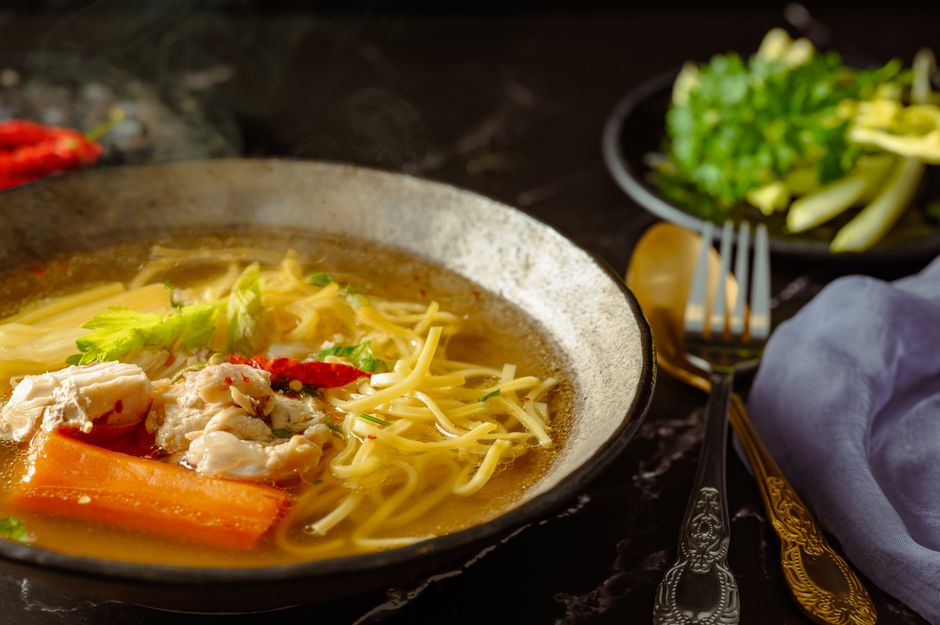
Few things comfort like a bowl of homemade chicken noodle soup. Tender chicken, soft noodles, and sweet carrots and celery in a golden, savoury broth — it's the cure-all for cold days, sniffles, and tired evenings. It's the first thing I make when anyone in the house is under the weather, and making it from scratch is far easier than you'd think, with a depth of flavour no can could match.
This is the cosy, soul-warming version worth keeping on hand, with simple tricks for the richest broth and noodles that don't turn to mush.
 Quick navigationCurated by Emma · 7 min read
Why you'll love this recipe
- Soul-warming. The ultimate comfort in a bowl.
- From scratch, made simple. Better than canned, easy to make.
- One pot. Cosy dinner with minimal cleanup.
The secret most people miss: cook the noodles separately
Here's the trick that separates great chicken noodle soup from a sad, bloated pot of mush by day two — and it's the opposite of what the recipe seems to suggest. If you're making this to keep as leftovers, cook the noodles separately and add them to each bowl rather than dumping them all into the pot. The reason is simple: noodles are little sponges. Left sitting in the broth, they keep absorbing liquid for hours and days, swelling into soft, bloated, mushy strands while drinking up all your beautiful golden broth, leaving the soup thick and the noodles unpleasant. By cooking the noodles on the side and combining them with broth only in the bowl you're eating now, you keep the broth brothy and the noodles perfectly tender every single time — including the leftovers, which reheat like fresh. If you're serving the whole batch at once, you can cook them right in the soup at the end (they soak up flavour beautifully) — just be aware any leftovers will soften. For meal prep, separate is the way.
Tips for the best results
Sauté the vegetables first to build flavour, and use good-quality broth (or simmer chicken to make your own). Cook the noodles separately if you're planning leftovers, since they soak up broth and soften over time. Finish with fresh herbs and a squeeze of lemon to brighten it.
Classic Chicken Noodle Soup
Tender chicken, soft noodles, and vegetables in a golden, savory homemade broth.
☆☆☆☆☆
Ingredients
- 2 tbsp olive oil
- 1 onion, diced
- 3 carrots, sliced
- 3 celery stalks, sliced
- 3 cloves garlic, minced
- 8 cups chicken broth
- 1.5 lb (680 g) boneless chicken breasts or thighs
- 1 tsp dried thyme
- 2 bay leaves
- 8 oz (225 g) egg noodles
- 1/4 cup parsley, salt, pepper, lemon
Instructions
- Step 1. Heat the oil in a large pot over medium heat. Add the onion, carrots, and celery and cook 5-6 minutes until softened. Stir in the garlic for 1 minute.
- Step 2. Add the broth, chicken, thyme, and bay leaves. Bring to a simmer and cook 15-18 minutes, until the chicken is cooked through.
- Step 3. Remove the chicken, shred it with two forks, and return it to the pot.
- Step 4. Add the egg noodles and simmer 6-8 minutes until tender.
- Step 5. Discard the bay leaves. Stir in the parsley, season with salt and pepper, and finish with a squeeze of lemon.
Building deeper flavour (and the bright finish that wakes it up)
Even with store-bought broth, a few moves give this soup a rich, made-from-scratch taste. Start by sautéing the vegetables — the onion, carrot, and celery (the classic "mirepoix") — in a little oil before the broth goes in; this softens and sweetens them and lays down a savoury base that simmering alone can't replicate. Use the best broth you can, and if you have time, poaching bone-in chicken right in the pot makes the broth richer still. For an extra hit of savoury depth, a few sneaky additions work wonders: a Parmesan rind simmered in the pot, or a small splash of fish sauce (you won't taste it, but it deepens everything), adds the elusive "what makes this so good?" quality. Then — and don't skip this — finish bright. A handful of fresh parsley or dill stirred in at the end and a squeeze of lemon lift the whole soup, cutting the richness and waking up all those savoury flavours so it tastes fresh and lively rather than heavy and flat. That contrast of deep, golden broth and a bright, herby finish is what makes a bowl genuinely soul-warming.
Make it your own
Add a handful of spinach or peas, a Parmesan rind for richness, or a pinch of red pepper flakes. Swap egg noodles for orzo, rice, or tortellini, or use leftover rotisserie chicken to make it even faster.
Frequently asked questions
How do I keep the noodles from getting mushy? Cook them separately and add to each bowl if you're storing leftovers, since they keep absorbing broth and soften over time.
Can I make it ahead? Yes — the broth and chicken keep 4 days refrigerated or 3 months frozen. Cook and add fresh noodles when reheating for the best texture.
How do I get a richer broth? Use bone-in chicken or add a splash of fish sauce or a Parmesan rind while it simmers for extra savoury depth, and sauté the vegetables first.
Why does my chicken noodle soup taste flat? It likely needs a savoury base and a bright finish. Sauté the vegetables first, use good broth, and finish with fresh herbs and a squeeze of lemon to wake it up.
Can I use rotisserie chicken? Absolutely — stir in shredded rotisserie chicken near the end instead of poaching raw chicken. It's a great shortcut that still tastes homemade.
Read next



Related articles
- Easy No-Bake Cheesecake
- Buffalo Chicken Dip (Baked, Creamy, Crowd-Favorite)
- Classic Caesar Salad with Homemade Dressing
- Mediterranean Pasta Salad
- Classic Vanilla Cupcakes from Scratch
- Soft-Batch Chocolate Chip Cookies
Further reading & trusted sources
From our test kitchen
The biggest leftover-killer is leaving the noodles in the pot — they keep drinking broth for days and turn to mush. Cook them separately and add to each bowl if you’re saving any.
Emma thinks a recipe has failed if it needs a long backstory before the ingredients — so hers get straight to the point, with the small technique notes that actually change how a dish turns out. She leads The Nourish Kitchen’s recipes and food guides, writing each one to work in a real, busy kitchen rather than a photo studio. AI tools help with research and drafting, and a human checks every recipe for clarity and food safety before it publishes. Nutrition figures are honest estimates, never guarantees.